4 min read
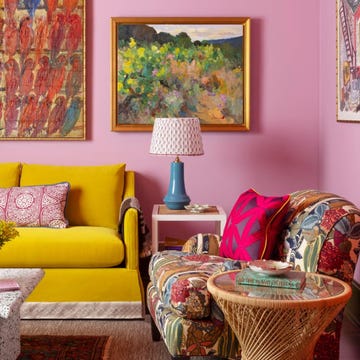
After years of pared-back palettes and extreme minimalism, the home is getting its personality back. Once reserved for accent pieces or fleeting trends, whimsy is now showing up in full force, as homeowners embrace color, character, and a sense of play across every room. From tabletop to textiles, the shift is less about perfection and more about expression.
“After years of white, minimalistic palette cleansers, people are craving depth, personality, and character,” says Chrissie Anthony Haim, a Long Island, New York–based interior designer and owner of Chrissie Home and Design. “Homeowners want spaces that reflect who they are, what they love, and where they’ve been.”
The result is a growing movement toward interiors that feel lived-in and truly homey. These are spaces designed to spark curiosity, tell stories, and invite a little bit of joy into the everyday. For designers, the shift is as exciting as it is liberating.
“Whimsy works best when it feels integrated into the overall narrative of the home,” says Kim Lewis, founder and creative director of Kim Lewis Designs, based in Austin, Texas. “Whether it’s color, pattern, vintage pieces, or sculptural details, each element should feel like part of a larger story.” In other words, whimsy isn’t about adding something random—it’s about building something meaningful.
Here are five ways that interior designers recommend layering whimsical elements into your next design project.
Go Bold on Color and Pattern

If there’s one place to begin getting whimsical, designers agree it’s with color. Bold paint, patterned wallpaper, and expressive textiles are some of the easiest ways to introduce a little fun while still maintaining cohesion.
Gary Inman of Richmond, Virginia–based Gary Inman Interior Design sees this as a natural response to the pace and sameness of modern life. “Bold colors and patterns, carefully curated collections, family heirlooms, and truly comfortable furniture can elevate the spirit and energize and delight us in profound ways.” For him, whimsy is most effective when it’s deeply personal and rooted in memory, travel, and experience.
To this, Haim points to the ceiling as an underutilized opportunity. “Pay attention to the ‘fifth wall,’” she says. “Painting it a bold color or adding wallpaper can make a striking impact in an unexpected way.” Smaller spaces like powder rooms, entryways, and offices are ideal for experimenting, allowing homeowners to take risks without overwhelming the entire home.
Gary often takes that idea a step further by designing moments of surprise into a home. “I love painting the inside of a closet in cerulean blue or shocking pink,” he says. “I once papered a guest cloak closet with a life-size image of Mick Jagger—it instantly became the preferred Instagram selfie.” These unexpected details both add visual interest and create experiences within the home.
Layer In Vintage and One-of-a-Kind Pieces

Whimsy thrives in spaces that feel collected rather than curated, and nothing delivers that sense of individuality quite like vintage or handcrafted pieces.
“After digital and AI overload, people crave authenticity,” Lewis explains. “In a world of mass production, handcrafted, one-of-a-kind pieces feel rare. Pieces that have history and visible craft bring personality to interiors.”
Whether sourced from a local antique shop, a flea market, or even a family collection, these pieces anchor a space in something real—something that can’t be replicated.
Make Small but Impactful Changes

Introducing whimsy doesn’t have to mean a full redesign. Often, the most effective changes are the most approachable.
Reupholstering a bench or ottoman in an unexpected fabric is one such example. “It allows you to showcase personality in a subtle yet impactful way, while still maintaining the overall aesthetic,” Haim says.
Inman points to similarly small but strategic updates, like cabinet hardware, trays, or pillows, as opportunities to add humor and personality. “Cabinet hardware can be a cheeky way to add humor to a room,” he notes, while pieces with witty quotes or playful details are increasingly popular among clients looking to inject a bit of fun into their homes.
Make It Personal and Emotional

At its core, whimsy is about connection. The most successful spaces aren’t just visually interesting—they’re emotionally resonant.
“I believe whimsy should be something that brings a smile to your face—or better yet, a good laugh,” Inman says. “It can be a memory of a place, a person, or a favorite city.” He recalls shadowboxing matchbooks collected over decades of travel.
That storytelling is something Jess Nahon, principal of Sugarhouse Design and Architecture in New York City, also prioritizes. “We always begin with context,” she says. “Where does the project live, what is its architectural language, and how does it connect to its surroundings?” From there, she layers in moments of surprise through color, materiality, and art, always ensuring they feel cohesive and intentional.
Sometimes, that inspiration comes from unexpected places. In one project, a single scent (“Dattes” by Fragonard) became the foundation for an entire design concept, resulting in a bold, textured home that felt transportive and immersive. In another, a custom mural inspired by coastal skies brought the outside in, grounding whimsy in a sense of place.
“When those gestures are rooted in context and balanced with restraint, they can feel playful while still remaining elevated and enduring,” Nahon says.
Let Go of the Rules

If there’s one throughline across all of these approaches, it’s this: whimsy requires a willingness to loosen up.
“Whimsy design requires us to take the guards off,” Lewis says. “Cut loose a little.”
That doesn’t mean abandoning good design, but it does mean redefining it. In a screen-mediated society that often feels increasingly uniform, the home is becoming something else entirely: a place for expression, imagination, and joy.
As Inman puts it, “Home is our oasis in a sometimes frantic world. When thoughtfully designed—with color, pattern, and personality—it becomes a sanctuary that energizes, delights, and truly reflects who we are.”