4 min read
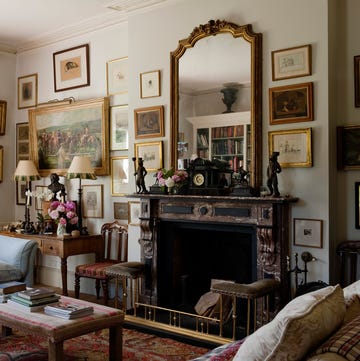
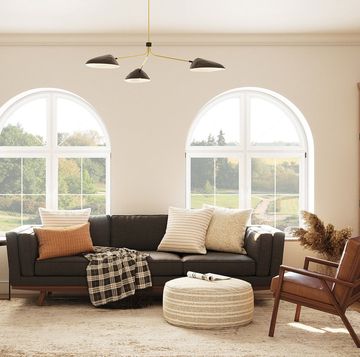
As any designer will tell you: The secret to a layered home is mixing high and low, dark and light, and, most importantly, old and new. There’s a way to weave antiques into your design scheme without making your home look like a time capsule from the early 20th century, and it’s shockingly easier than you may think. The key to that coveted new-old mix, according to designers? Choosing one or two antiques per room and keeping the rest of the furniture in the current century to avoid skewing the aesthetic too far in either direction.
Ahead, we explore seven spaces that look collected yet lived-in with one or two standout antique pieces that perfectly complement their contemporary counterparts. Whether you’re going with an antique desk flanked by two brand-new sconces or a custom bed beside mismatched nightstands from Brimfield Antique Flea Market, there’s a way to get it right—and these designers are spilling the secret.
Keep the Lines Consistent

Designer Anne McDonald has a signature style, and it involves mixing old and new, a key element in every project she works on. “'It's that healthy tension that makes a home emit the warmth and coziness we're always chasing,” she admits. Nowhere is her philosophy more on display than in this bedroom, which includes a Parachute bed frame and a set of vintage Danish nightstands. The commonality? The curved, gentle lines of each piece. “We love this combo paired with the green-gray tone of Farrow & Ball's Cromarty and the sconces on the walls,” she adds.
Don’t Ignore Fabrics

Designer Ashley Yarchin is the kind of designer who’s able to masterfully enhance what her clients already own. In this case, their pre-existing collection included a myriad of antique and vintage pieces. “To build on their practice, we continued to shop secondhand,” she explains. She discovered the 18th-century Louis XV secretary desk at a local consignment shop, and the chair, though old, is covered in a brand-new fabric. “The magic of blending old and new can sometimes call for a few tricks up our sleeves,” she adds. In this case, she pumped some 21st-century life into a 1940s piece.
Go for High Contrast

It’s safe to say that any bathroom clad completely in dark marble with dramatic white veining is about as contemporary as it gets. Throw in a minimalist, glass-walled shower, and it’s basically a bathroom from the future. Designer Liz Caan wanted to incorporate some warmth into the sleek space, so she added a 1950s tripod chair that touts enviable patina. “It felt a little primitive and like the perfect antidote to the very minimalist bathroom with maximal stone,” she says. “The idea was to offset the cold, hard stone and crisp lines with something that has age, natural materials, and an interesting shape.” What’s more, she adds, she uses this trick in most of her modern bathrooms to give them a little bit more personality.
Honor the Architecture

The older pieces in this space, the Eames lounge chair and matching ottoman, pay homage to the home’s architectural elements, such as the wood panelling and perfect symmetry. “From there, we layered in more modern, sculptural pieces to introduce ease and a sense of livability,” says designer Zoë Feldman. “The Eames lounge, though, softens the formality, making the space feel layered and evolved rather than designed all at once.”
Keep the Palette Consistent

Jack Simpson, CEO and founder of London-based Nomad, intentionally designed this nook with some tension—the good kind that only comes from incorporating pieces from vastly different time periods. In this case, it’s the antique gilded Spanish enfilade and the brand-new travertine table. What ties them together, though, is the tonal color scheme. “The palette is deliberately soft, almost tonal, allowing the pieces themselves to speak in a more nuanced way,” Simpson says. “The patina, the intricacy, and the warmth of the gilding introduce a layer of depth that a purely contemporary scheme would lack.”
Start With the Old

In some rooms, it’s not quite clear which is the older piece and which is the newer. In this space, designed by Lee Ledbetter, it’s quite obvious: The mirror, an antique Louis XVI-era piece, is paired with custom contemporary furniture. “When thoughtfully composed, old and new don’t just coexist—they elevate one another, provided the scale is right, and the balance feels intentional,” Ledbetter says.
Create Complements

As is the case with plenty of design juxtapositions, there’s no specific antique-related rule that, if broken, will ruin the room. One designer who massively agrees with this sentiment is Kylie K. Bass, founder of KKB Interiors, who is guided more by intuition than it is strict policies. “It’s inherently subjective, and the most compelling spaces come from choosing pieces you genuinely love,” she admits.
Her approach to incorporating antiques into a relatively contemporary space is totally intuitive and dependent on the space. “My personal goal with using antiques is to create a sense of balance, making sure the pieces complement rather than compete with one another,” she adds. All of that said, she does like to let the more special piece shine, so if that happens to be the antique, she’ll use a quieter contemporary counterpart, and vice versa.