
 6 min read
Welcome to Wellness Redefined, a collaboration between House Beautiful, Women’s Health, and Men’s Health. We’re pulling back the curtain on how the spaces we design can help us sleep deeper, recover smarter, move more, and feel calmer. Follow along here for the best editor-vetted wellness products, designer home gym ideas, and so much more.
Achieving "room serenity" can often feel like a delicate balance. You want an environment that cultivates a sense of calm and immediately makes you feel more relaxed when you walk through the door, but it also needs to feel tailored to you. The best person to ask for the blueprint? Well, how about a therapist?
Think about it: One of the most important parts of their job is making you feel at ease in order for you to feel comfortable being vulnerable. The design of their office is often a huge part of that; if you feel like you're walking into an examination room, you might keep your guard up. Interior designers who work with therapists (or use neuroscience findings to inform their choices) frequently take this element into account.
"A therapist’s office is, at its best, a sanctuary of stillness," interior designer Rachel Blindauer says, "I often ask my therapist clients: Where do you want the eye to rest? Where do you want the heart to land? That conversation becomes the foundation of the design. I build in asymmetry to avoid rigidity, muted palettes for safety, and natural materials—linen, wool, unfinished wood—that ground the space in the sensory world. Vulnerability requires softness, but also containment."
The lessons you can learn from therapeutic design can make any home feel more tranquil. You don't need to limit yourself to a specific aesthetic, either. People often gravitate toward Japanese-inspired wabi-sabi, organic modernism, Scandinavian minimalism, or Japandi styles for serenity, but, in the end, it's more about the intention than a particular design style. "What they all share is restraint, reverence for texture, and a belief in negative space," Blindauer says. "It’s not just what you put in—it’s what you leave out."
You have to remember to customize, too. Everyone's individual life story will change the way they react to different design cues. "Those with heightened sensory sensitivity or trauma histories may have stronger responses to certain lighting or color conditions, so personalization is key," design psychologist Sarah Seung-McFarland says.
Scroll on for expert advice from designers and mental health professionals on everything to add to achieve a serene aesthetic—and what to avoid.
Bring in Biophilic Features
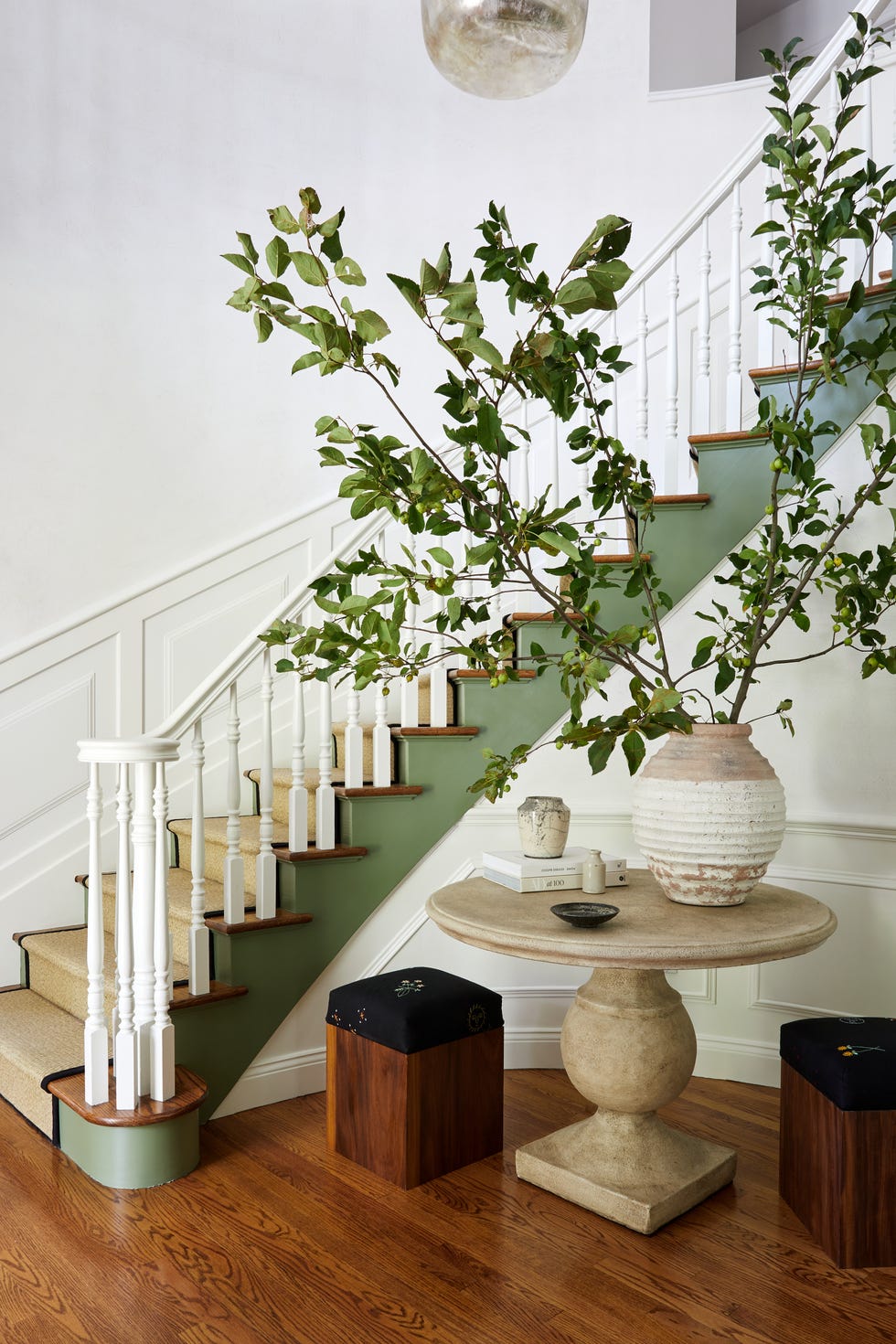
One of the easiest ways to add some serenity to your space is to integrate themes from the natural world. Biophilic design, which centers around elements of nature, is your best friend here. This includes everything from live houseplants to small water fountains. Anita Yokota, a licensed therapist-turned-interior designer, leans toward materials like wood, rattan, and stone to offer a grounding energy. "These connect us back to something primal and steady," she says.
Think beyond live plants and moss, though. Even nature-inspired patterns in your rugs or art can bring a sense of ease. "We are drawn to fractals—repeating natural patterns found in ferns, leaves, even firelight—because our brains process them easily and pleasurably," says Erica McLain, a Science in Design-certified interior designer.
Incorporate Nature-Inspired Colors

In a similar vein, when selecting a serene color palette, you can never go wrong with earth tones. This is not the time for overly vibrant hues, so steer clear of the saturated, high-contrast primary colors, as this can easily feel overstimulating. Yokota recommends muted hues like blush, lavender, and sage green, "as long as they have gray undertones to soften their intensity and invite quiet."
That doesn't mean your design scheme has to be dreary, though. Licensed psychologist Hannah Holmes designed her own therapy office for a balance of calmness and alertness, wanting her clients to feel safe yet inspired. "I balanced cool tones—gray carpet, gray and blue area rug, and cool florals—with pops of warmth—brown leather, wood accents, and orange accents—to make the space feel both peaceful and 'alive,'" Holmes says.
Another thing to keep in mind: Blindauer cautions against painting your space in a too-trendy color. "A serene room should feel timeless, not timestamped," Blindauer says.
Layer Your Lighting

As you might've expected, the "big light" often isn't conducive to room serenity. Harsh overhead lighting creates more tension than calm. Instead, make sure to have warm and dimmable sources of lighting placed throughout the room. Eryn Oruncak, a Science In Design-certified interior designer, focuses on "beautiful lamps with warm bulbs, quality task lighting on the desk, and as much natural light as you can get."
"This kind of layered lighting creates gentle contrasts between shadow and glow, which helps the brain regulate and feel cocooned," Yokota adds. "Neuroscience shows that soft, indirect lighting lowers cortisol levels and helps shift the body from 'fight-or-flight' to 'rest-and-digest.'"
To help achieve this, look for bulbs with a color temperature of 3000K or less. Krista Walker, Clinical Director of The Ohana Luxury Addiction Treatment Center, advises that smart lighting is ideal for this look, as it's one of the most easily adjustable lighting technologies. Don't underestimate the power of natural light, though. Sunlight filtering through a large plant by a window can easily relax you.
"Humans also feel most at ease under dappled lighting, which is similar to the light you would experience outdoors on a sunny day as it breaks through trees or branches," designer Amber Dunford says.
Arrange Inviting Seating

Though "therapeutic seating" might conjure the image of a Freudian chaise lounge, there are plenty of other furniture styles that'll help put you at ease. The main features you want to look for? Soft lines and rounded silhouettes. As Yokota puts it, "no sharp edges, no emotional armor."
It's not just the chairs themselves that matter, though—it's their positioning. The arrangements should place people on equal footing. To soften power dynamics, Yokota often recommends slightly angled seating, which is a touch less intense than face-to-face seating. Holmes pays attention to how the position of her seating can impact a sense of safety, and keep you from feeling penned in.
"I intentionally positioned seating within the room so that both the client's seating options and mine are easily accessible to the door, which is helpful to a person who may have a history of trauma or stressful experiences, and offer a view out the window," Holmes says.
Choose Soothing Textures

Walker knows the importance of soft textures to rest against. They communicate warmth, and touching them can help calm nerves. "Texture is the unsung hero of serenity," Blindauer says. "Bouclé, washed linen, matte clay—all these create a tactile lullaby. I avoid anything slick or too cold to the touch." It's not just the blankets and throw pillows, though. The same principle applies to your upholstery and flooring. Focus on rich fabrics and soft rugs underfoot for a cozy feel all around.
"Soft, tactile materials like velvet, linen, or chunky knits enhance comfort and emotional safety, inviting physical touch to help occupants feel supported and emotionally grounded," interior designer Christina Kelley says.
Furniture made from real, solid materials is also healthier for you, physically. So wherever you can afford to, opt for true, exposed wood grain as opposed to painted wood. "From a wellness perspective, calm starts with what a piece is made of, not just how it looks," Elizabeth Valkovics of Batten Court Design says. "We prioritize solid wood furniture, preferably FSC-certified, and pieces finished with low-VOC or water-based sealants to reduce off-gassing and support healthier indoor air quality."
Avoid Anything That Feels Cold
If there's one important takeaway to achieving "room serenity," it's to do away with anything that feels too formal and cold. You want your home to feel peaceful, comfy, and lived-in, not sterile like a spaceship. "You want to avoid overly clinical spaces that remind clients of being at a hospital," Walker says. "Avoid rigid chairs and seating. Also, avoid overcrowded spaces."
Glossy glass tables might be great for the dining room, but many people can feel on edge around them. Keep the sharp edges in task-oriented spaces. "Avoid slatted blinds, ceiling tiles, large square downlights, busy patterns, harsh lighting, corporate finishes, hard-edged furniture, stark contrasts, and highly reflective surfaces, as these can feel cold, sterile, and overly stimulating rather than soothing," Kelley says.
The beauty of creating a serene room is in the little things. You don't have to undergo the stress of a major renovation to invite in ease. "Even small details, like an armrest that yields or a pillow that invites, can subtly signal that here, you’re safe to exhale," McLain says.


