7 min read
Some animals are always welcome guests in our backyards—you might plant flowers to attract butterflies or set up a bat house to help cut down on mosquitoes. Wasps, however, are among the insects most people would rather not have lingering around their outdoor spaces. Their stings can be intense and painful, and unlike bees, they don’t lose their stingers after attacking, meaning they can sting repeatedly. In most cases, their stings cause pain and itchy welts, but for those with allergies, they can trigger severe reactions that may require emergency care.
That said, wasps aren’t entirely bad—they can act as pollinators and help control other insect populations.
“The biggest concern is the stings,” says Alexander Gray, the district manager of the Kansas City–based Trutech Wildlife Service. “Simply passing too close to a wasp nest can trigger an attack as the pests are very aggressive.”
Certain types of wasps are more aggressive than others. Paper wasps, yellowjackets, and bald-faced hornets are known for posing greater stinging risks, while mud daubers tend to be less hostile (more on the different types below). Even small disturbances—like the vibration from a lawnmower—can provoke them into becoming defensive.
Since disturbing a colony can lead to multiple stings, it’s often safest to leave wasp removal to professionals. This is especially true if you’re unsure what kind of wasps you’re dealing with or if you discover large nests between August and October, when their aggression peaks, Gray notes. Removing nests can also involve climbing ladders or accessing tight spaces, which adds another layer of risk.
Ahead, wasp experts share effective ways to remove nests and offer advice on how to prevent these stinging insects from settling in your yard in the first place.
Common Types of Wasps
While there are thousands of wasp types, they’re usually separated into two categories: Social wasps that live in nests together and solitary wasps that are rarely dangerous, explains Bryan McGee, the grounds manager of pest control for SSC Services for Education, which provides grounds management services for K-12 and higher education institutions across the U.S.
Social wasps, like paper wasps, bald-faced hornets, and yellowjackets, attack most often when they are disturbed, irritated, or threatened in some way, McGee says. If you need help identifying a wasp and gauging the dangers it poses, he recommends referring to a site like InsectIdentification.org.
Here are some common social wasps that are known to sting:
Paper Wasps
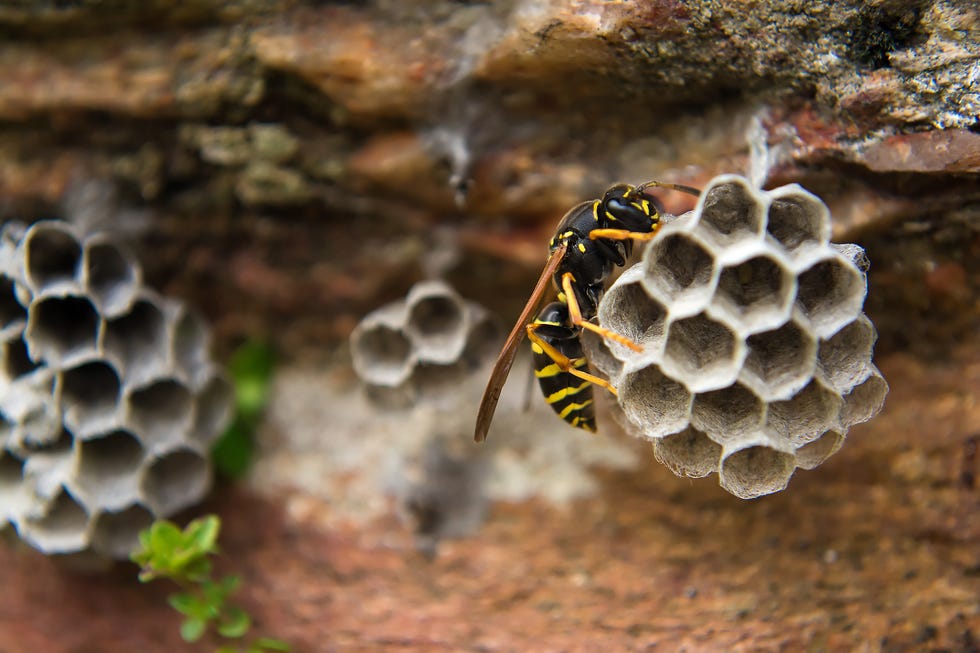
Mostly brown with some yellow markings, paper wasps could be mistaken for yellowjackets, but they have a thinner waist. They build paper-like nests that look like honeycombs in crevices and nooks like porch ceilings, roof hangs, under-deck areas, and even patio furniture or gutters.
You can usually treat paper wasps yourself because they’re not as aggressive as other types of wasps and their nests are smaller with open holes.
Yellowjackets
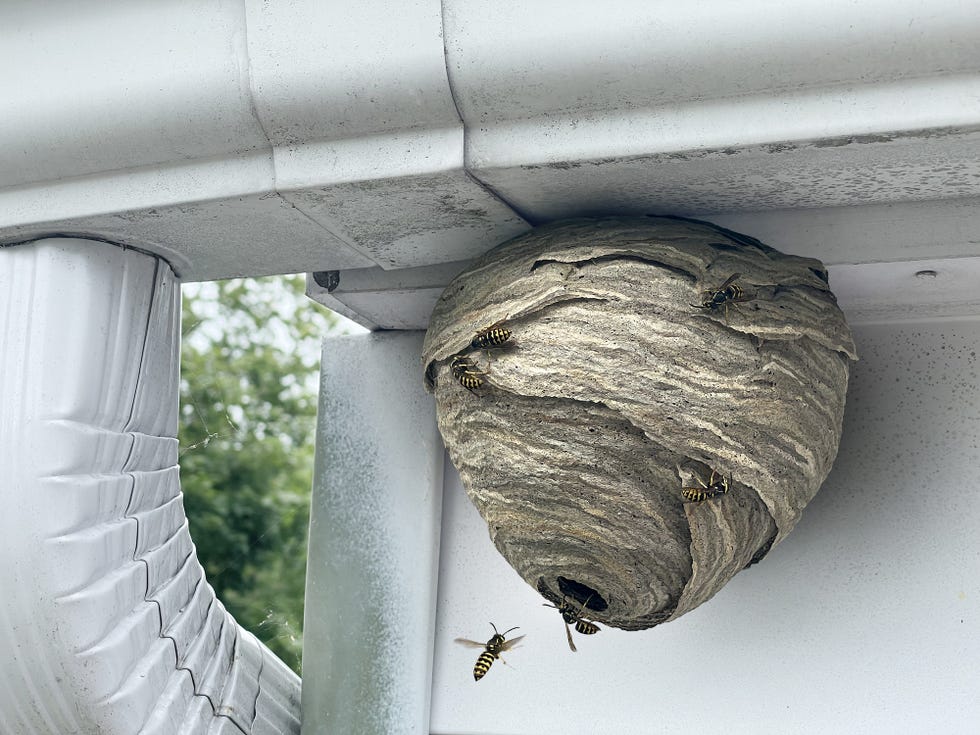
Active in the summer and fall, yellowjackets are sometimes confused for honeybees because they are similar in size and also have alternating black-and-yellow colors. But bees are fuzzy and rounder, while yellowjackets are more narrow and have yellow spindly legs. A yellowjackets queen can survive through the winter, burrowed in the nest, ready to start a new colony in the spring.
Yellowjackets are very aggressive and will make their colonies inside of wall voids, under shingles, in gutters, or even small openings around the home, says Dan “The Bug Man” Latini, the owner of Dan Can Home Services in New Jersey, whose main service is pest control. Yellowjackets also love to make underground colonies inside old holes like burrows dug by rodents.
Yellowjackets, especially when they’re burrowed in the ground, are usually best left to professionals to treat.
Bald-Faced Hornet
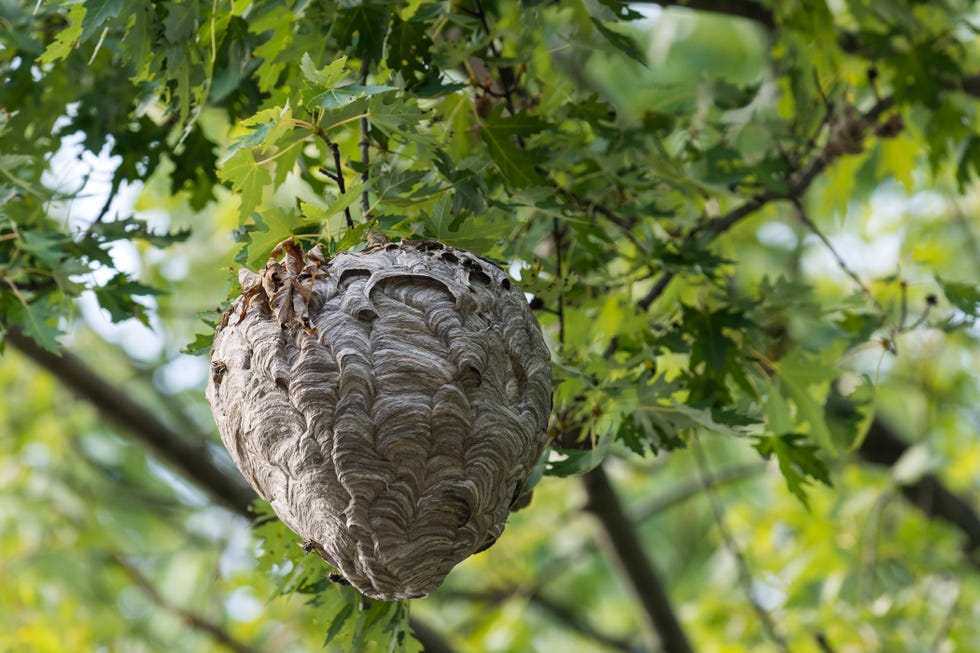
Bald-face hornets are mostly black with white and ivory markings. Their rounded nests are very large, (about 14 inches in diameter and 24 inches in length) with a grayish color that may be seen in shrubs, overhangs, and corners of houses, says Joe Malinowski, vice president of pest management at Pest Authority and Mosquito Authority.
Wood pulp-wrapped bald-face hornet nests aren’t an easy DIY removal task, either, because it’s too difficult to spray into the nest.
Signs That You Have a Wasp’s Nest
Swarms of wasps are a telltale sign that the insects are out foraging for food as well as materials to build their nearby nest. They’re typically found on the sunnier sides of homes and lawns, Latini says.
You might also hear buzzing, which is especially problematic if it’s coming from indoors because it probably means a wasp is building its nest in your rafters or attic.
But the most obvious sign that you have a wasp’s nest is you spot one. Wasps often build nests in sheltered spots like under eaves, rooflines, or overhangs. They like enclosed, warm spaces like attics, garages, sheds, under-porch areas, decks, or in the corners of outdoor furniture, says Aldo Ceja, a home expert at Thumbtack. You might even find them in birdhouses or gutters.
“I recommend regularly inspecting your home for potential entry points, like cracks or gaps in walls, roofs, and around windows and sealing them so you reduce the risk of wasp nests and infestations,” Ceja says.
After all, you don’t want to unknowingly sneak up on a colony and be met with territorial wasps.
How to Remove a Wasp’s Nest

Before you attempt to get rid of a wasp’s nest, consider whether the wasps are an actual nuisance. If the nest is in a highly trafficked area of your lawn or an area where your pets or kids play, and you’re worried about wasp stings, it makes sense to get rid of the nest. However, if the nest is burrowed in a tree and out of the way, and the wasps aren’t causing a disturbance, it may be best to leave these pollinators alone.
Your approach to removing a wasp’s nest will depend on the type of wasp’s nest you have.
Use a Wasp Spray
Wasp sprays usually cost between $8 to $15, and they work by spraying foam at the nest, which covers the wasps. These treatments typically contain pyrethrin or pyrethroid as an active ingredient, explains exterminator Rocky Beninato, the founder of Toronto–based Quality Affordable Pest Control. These ingredients will kill the wasps immediately on contact or interrupt their nervous system and cause paralysis and eventually death.
Here are the steps to safely use a wasp spray:
- Wear protective clothing, including a long-sleeve shirt, pants, rubber boots or closed-toe shoes, a mask or scarf, gloves, and protective eyewear.
- Pick a spray that works from a distance, and make sure it’s not too windy to avoid getting sprayed yourself, Beninato says.
- Follow the instructions on the can; most will instruct you to spray at the nest's entrance, Beninato says.
- Most sprays will instruct you to wait 48 hours after spraying the nest before removing it. Again, wear protective clothing in case there are any remaining alive wasps.
- Use a broom handle to remove the nest and put it into a garbage bag.
- Tie the bag and place it in an outdoor trash can.
- Use soap and water or diluted bleach to clean the area where the nest was situated to help prevent wasps from coming back, Beninato says.
An important note: Wasp sprays can potentially damage your siding by warping vinyl or staining it, Latini says. If the nest is close to your home’s entrance, they may also try to force themselves inside, which becomes even more problematic, he says.
Spray a DIY Solution
If there is an active wasp nest, a simple solution of two tablespoons of dish soap added to a spray bottle of water can be used to treat the nest, says David Price, associate certified entomologist and director of technical services at Mosquito Joe, a Neighborly company.
This works because the soap will clog their spiracles, which are openings to allow oxygen. Again, it’s important to keep your distance and wear protective clothing so you reduce your risk of being stung. Once you don’t see any active wasps, you can knock down the nest to discourage others from reinhabiting the nest, he says.
Hang a Fake Wasp Nest
Certain wasps like bald-faced hornets are territorial so hanging a fake wasp nest can keep them away, but will only stop certain kinds, Gray says. “I have seen paper wasps use them as nests, so you might just be trading species there,” he explains.
Call In a Professional
Often, it’s not safe to try to remove nests on your own, so it’s best to call in an expert. Professional pest control experts will have the proper attire for protection and be armed with the needed tools and products to remedy and remove the wasp problem. If you have aggressive yellowjackets or a large bald-faced hornet nest, it’s probably a job best left to the pros.
How to Prevent Wasps From Coming Back
Once you get rid of wasps, you don’t want them coming back! Here are some tips from Price on how to prevent wasps from building another nest in a nearby area of your yard:
- Make sure to clean up your grill and surrounding area to not leave any scraps or meat drippings.
- Wrap up soda cans before disposing of them in the trash.
- Make sure garbage bags are tightly tied off before disposing in the garbage can.
- Clean up fallen fruit if you have a fruit tree.
- Hang wasp traps at the outer perimeter of the yard.
Finally, make sure to keep sugar sources like hummingbird feeders away from areas you sit, Gray says. The sweet liquid can attract all sorts of unwanted flying insects, including wasps.