5 min read
Welcome to Wellness Redefined, a collaboration between House Beautiful, Women’s Health, and Men’s Health. We’re pulling back the curtain on how the spaces we design can help us sleep deeper, recover smarter, move more, and feel calmer. Follow along here for the best editor-vetted wellness products, designer home gym ideas, and so much more.
There's something special about a bedroom that truly makes room for rest. Not just a convenient place to collapse exhausted at the end of a long day, but a thoughtfully designed retreat—one that signals, in ways both subtle and sensory, that it's time for an exhale. In a world that glorifies work and promotes late-night doomscrolling, curating the perfect sleep environment has become less of a luxury and more of an essential design pursuit.
"From a health perspective, the bedroom plays a larger role than most people realize. We spend roughly a third of our lives there, and it is where the body does much of its essential repair work," says Lisa Sternfeld, founder of WLLW, a design studio and editorial platform focused on creating healthy, restorative homes. Sleep is when the nervous system resets, hormones regulate, immune function strengthens, and the body recovers from daily stress. If your bedroom is bright, visually noisy, or filled with distractions, your body may never fully register that it's safe to rest. Over time, that lack of deep restoration can affect energy, focus, and overall well-being.
"I often tell clients that if the bedroom does not support rest, no amount of beautiful design elsewhere in the house can make up for it," adds Sternfeld. "Design choices here should prioritize calm, quiet, clean air, and comfort. That includes being thoughtful about what we sleep on, touch, and breathe in. The goal is to create a room that is as beautiful as it is restorative, designed to feel calm, comfortable, and easy to live in."
Creating a bedroom sanctuary that promotes rest is about more than just choosing beautiful finishes; it's about catering your choices to how you find rest and contentment. From an enveloping atmosphere and cozy layered lighting to bedside essentials that act as a buffer from the real world, each element works together to create a well-edited room. Below, we've tapped pros who specialize in holistic and wellness-based design to share their tips on how to create a bedroom that feels deeply restorative and beautifully considered. Because when design and well-being align, the result isn't just a pretty space; it's a full eight hours of truly transformative rest.
Consider Your Furniture Placement

When you think of cultivating a serene space, your mind probably immediately goes to comfy fabrics and a calming neutral palette—but, before you even get there, you need to consider the layout of your space. According to Gabbi Sun, founder of design-architecture firm Venn Studio, where you put your furniture is just as important as how it looks.
"One of the first ways we help clients create a calm bedroom environment is through thoughtful bed placement," she adds. "We often avoid positioning the foot of the bed directly facing the entry, supporting a sense of ease and balance in the space." Holistic interior designer Chelsey Preuss agrees, noting that ancient practices can help establish the best layout for your space.
"I like the bed in what feng shui calls the command position, where you can see the door but aren’t directly in line with it," she adds. "Even if someone doesn’t follow feng shui, this placement creates a subconscious sense of safety and security, which helps the nervous system relax."
Do Away With Screens

At this point, it's no secret that the stimulation and blue light from screens can disrupt sleep in a major way. Still, old habits die hard, and it may be tempting to incorporate a television into your bedroom as a means of relaxation. The expert take? Avoid it entirely, if you can.
"One of the most effective shifts people can make is simplifying their bedroom rather than adding to it," says Sternfeld. "Televisions, glowing screens, and constant connectivity can keep the brain alert, even when we think we are winding down. A calm bedroom limits those signals and allows the nervous system to slow naturally."


If you really can't imagine your bedtime ritual without a late-night binge of The Office, Preuss recommends swapping your traditional television for a projector, which will be easier on your eyes (and nervous system).
Mirror Mother Nature

Nature gets a lot right intuitively, and fans of biophilic design recommend looking to our outdoor environments to cultivate calm indoors.
"As a licensed therapist turned designer, I see the bedroom as the most important space for nervous system recovery, and I focus on biophilic design elements that mirror nature and signal safety to the nervous system," says designer Anita Yokota, whose new book, Grounded Living: Harmonizing Design and Nature in the Home, comes out this April. "That often starts with nature-inspired colors paired with tactile materials that feel grounding, like linen bedding, upholstered headboards, and wood finishes. I also prioritize layered, warm lighting instead of harsh overhead fixtures, which helps support circadian rhythms."
Speaking of circadian rhythms, Sun notes that many of the firm's clients are not only concerned about keeping light out in the evening hours through blackout shades, but also letting it in come morning to support a nature-aligned schedule. "Clients are increasingly prioritizing daylight as a key design element, recognizing how much sunlight supports energy, mood, and rest," she adds.
Focus on Material Quality
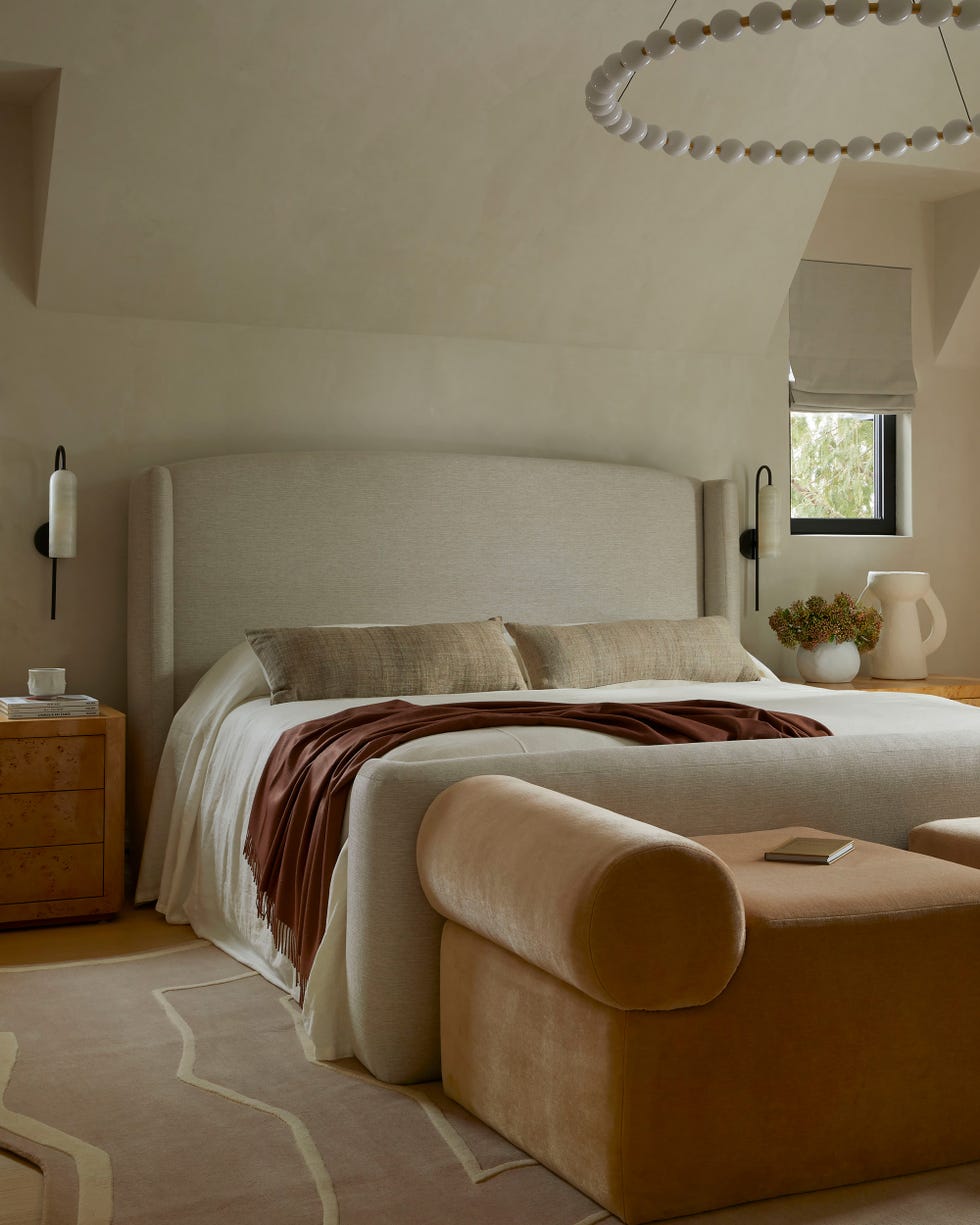
We've said it before, and we'll say it again: beauty isn't enough when it comes to designing a bedroom that fuels you. Pretty sheets that go well with your design scheme don't actually mean much if they don't make you feel good.
"We spend many uninterrupted hours in our bedrooms, breathing the same air and resting just inches from the materials that surround us," says Sternfeld. "That level of proximity makes these choices especially important. I encourage nontoxic mattresses and headboards, natural materials in bedding, rugs, and window treatments, and low- or no-VOC finishes on walls. Along with good ventilation, these choices help create a healthier environment that’s more comfortable to sleep in."
"Natural fibers like cotton and linen breathe better, regulate temperature, and feel better on the body," adds Preuss. "We spend so many hours in direct contact with these materials, and people are often surprised by how much better they sleep once they make that shift."
Cue Your Body Into Rest

No matter how relaxing your space is, stepping through the threshold of your bedroom isn't enough to instantly wind you down for bedtime. Your design needs to combine with tactile elements—scent, touch—to lull you into a chill mindset.
"I’m seeing a strong shift toward bedrooms designed intentionally for nervous system support, with biophilic design leading the way," says Yokota. "One of my favorite biophilic rituals is my Home Therapy Intention Tray, which sits on my bedside table with a candle and a calming scent. It creates a consistent sensory cue that helps my nervous system transition into rest. These small, intentional design choices help the bedroom feel like a true natural refuge, supporting relaxation, emotional regulation, and deeper sleep."