4 min read
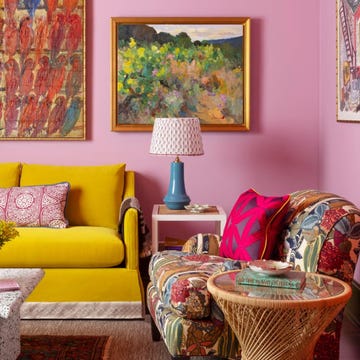
Pictured Above: Designer Kati Curtis swathed this “Millennial Gothic” home outside of Boston in rich, moody jewel tones and eschewed white walls completely.
Color has a subtle yet outsized influence on the human brain. A 2025 scientific article published in the Psychonomic Bulletin & Review analyzed over 130 peer-reviewed studies, finding numerous systematic associations between color and emotion. For those of us savvy enough to use this data to our advantage, we could potentially design our way into a better mood each day. One particularly striking way to inject more visual verve into the home is by decorating with jewel tones. This color category has long fascinated designers (and festooned many a mood board), but it can be potentially intimidating in its boldness.
“Jewel tones bring an unmatched depth and saturation to a space,” says designer Christine Zeiler. “There’s an intensity and richness that creates instant visual weight and sophistication.”
Much like their namesake gemstones, jewel tones have a “look at me” quality that’s hard to ignore. A powder-blue living room may offer versatility as an understated backdrop against your other decor, but the same space drenched in dramatic sapphire will pique the senses and turn the room itself into a statement.
“Unlike pastels or neutrals, jewel tones have an inherent opulence that can make a space feel more cocooning and intentional,” Zeiler continues. “They evoke a moody, luxurious atmosphere that feels both intimate and dramatic.”
Pantone may have chosen a muted gray, Cloud Dancer, as its 2026 Color of the Year, but a space dripping in jewel tones has a far more powerful visual—and emotional—impact. Ahead, designers reveal everything you need to know about how to color your world with jewel tones.
Pick One Hue and Build Around It

The number-one tip for decorating with jewel tones? Find a balance.
“It’s possible to go overboard with anything,” says Zeiler. “The key is intention; if every surface is screaming for attention, the space can feel overwhelming rather than curated.”
Designer Jenna Buck Gross of Colordrunk Designs advises focusing on one major color moment at a time. “Let one bold shade take the lead: on the walls, a sofa, drapery, or a major rug,” she says. “That’s what creates the drama and gives the room its signature mood.”
If you love easy-to-remember rules, consider following the classic 60-30-10 color formula, which breaks down a room’s palette into three parts: 60 percent of a space is dedicated to a dominant color, 30 percent to a supporting shade, and the remaining 10 percent to an accent color. This ratio keeps a space from feeling overwhelming—or, conversely, so understated that the colors barely register.
Designer Amber Guyton of Blessed Little Bungalow specifically suggests using jewel tones as the 60-percent “hero color” in this formula. Her reason being, “Jewel tones are powerful, and power requires discipline.”
Mix Tones With Intention

Ask any maximalist: One jewel tone in a space is nice, but more is more. Once you’ve decided on a bold hue to decorate around, you can amplify the drama by adding other colors of a similar saturation.


“Jewel tones are meant to mix,” Gross says. “Add them through accents, art, pillows, lamps, and smaller upholstery moments to create depth and that collected, sophisticated feel.”
Guyton echoes the sentiment that jewel tones play well with one another, listing off example pairings: “Teal and gold, emerald and magenta, chartreuse and navy blue. You can play with different combinations, but when in doubt, use the color wheel to see what colors pair best from across the wheel.”
Zeiler provides an important counterbalance: “Mixing jewel tones with warmer elements—like darker wood tones, leather, or brass accents—keeps them from feeling too cool or austere,” she says. There’s also one definitive don’t when it comes to color pairings with jewel tones. “If you mix them with pastels, the whole effect gets softened, and you lose that signature jewel-tone drama,” says Gross. In other words: nix the millennial gray!
Triple-Check Your Paint Choice

Just because you’ve fallen in love with a particular color doesn’t mean it’s going to read as brilliantly on your walls as it does on a paint swatch. This applies to any painting project, but it rings especially true for scene-stealing jewel tones.
“Consider how natural light affects the space throughout the day, since jewel tones can shift dramatically in different lighting,” Zeiler says. If you’re truly committed to the jewel-tone look, you’ll also want to test out how different brands—even in what seem like the exact same color and finish—read in a room. “Quality of pigment matters enormously,” she adds.
Gross also offers a tip for assessing where you can use what jewel tones. “Spaces with less light look best in deeper tones that feel cozy and intentional. If the room gets a ton of natural light, you can go for the brightest jewel tones without them feeling heavy.” Meaning, there’s a reason you see subterranean home lounges clad in deep amythyst and sapphire blue, while topaz yellow and hot pink are better suited for airy kitchens and living rooms.
Intersperse Pops of Color


We get it; sometimes a space calls for a microdose of color, rather than an all-out drench. Luckily, there are plenty of impactful ways to incorporate jewel tones into your interiors without rolling a new coat of paint onto your walls.
“I’m not afraid of commitment to color. But for those who are, textiles like velvet curtains or upholstery, artwork, or even a single statement piece of furniture can bring that jewel tone impact without the permanence,” Zeiler says.
Jewel tones, naturally, also make for gorgeous accessorizing. Against white walls or more subtle shades, the zing they deliver acts as an instant energy boost. “Add them through accents, art, pillows, lamps, and smaller upholstery moments to create depth and that collected, sophisticated feel,” Gross adds.
Plus, who knows? As you live among these smaller color accents and feel the hit of joy they bring each time you enter a room, you may become more comfortable with a larger-scale makeover in the future!