4 min read
If you live in suburbia, like me, you can probably relate—I have a tiny yard. In fact, it’s a tenth of an acre, which lines up closely with the stats of how small yards are these days. In 2016, The Atlantic reported that the average yard has decreased by 13 percent since 1978, down to .19 acres. Granted, houses tend to be larger than they were in the 1970s. But I can’t help but want a little more space to play with. That’s why I’ve been getting creative with my front yard’s curb appeal, even though we will likely sell this house someday.
“A quality landscape installation can dramatically improve the look of your home and can add up to 10% to your home value,” says landscape designer Karri Files Paul. “Small spaces can be just as impactful as larger spaces with the right design toolbox.”
Sam Niemann, Founder of Bleume houseplant fertilizer and landscape design firm Grown by Design, emphasizes that, while curb appeal is important in yards of all sizes, it rings especially true for small front yards. “Having a small front yard means that every piece of the landscape is highlighted and problem areas stand out,” he says. “Improving curb appeal adds value to your home and helps make sure the yard is maintained, preventing bigger issues down the road.”
Naturally, the front yard is the outdoor space passersby interact with the most, as Kat Aul Cervoni, Founder and Principal of Staghorn NYC Landscape Design and The Cultivation by Kat, points out, even if it’s just for a short amount of time. To help your small front yard stand out, read on for expert-led tips that won’t require you to do a full redesign.
Swap Out Sod
Sod-free yards are definitely trending these days. Instead of traditional grass, more homeowners are opting for creeping groundcovers like clover or moss, which are easier to maintain and more sustainably minded. In fact, Emily Maeda, vice president and creative director at Tree of Life Landscapes, recommends removing your sod from a small front yard. “Most people never use the sod in their front yards,” she says. “It's forgettable. It takes lots of resources and isn't very interesting. With limited space, use your space to set your yard apart from the boring, suburban front postage stamp of sod.”
Refresh the Entry Path

Hayden Regina, Director of Design at Nathan Wright Landscape Design, says that his team focuses on the “arrival” of a home, since the experience of approaching a house sets the tone for everything that follows.
“In a small front yard, the entry path is doing nearly all of that work,” he says. “It doesn't need to be replaced to be improved. Resetting existing pavers with a clean edge, introducing a new material band, or simply flanking the walk with a deliberate planting on both sides changes the entire character of the approach.”
Avoid Visual Clutter
When it comes to a small front yard, you should keep the age-old adage “Less is more” in mind. That’s why Files Paul recommends that you limit your plant palette.


“We like to focus on one key idea to avoid visual clutter in small spaces so that your eye knows where to land,” she says. “A great way to do that is to pick one to three plants based on the size of your space and plant them in a mass. The massing of one plant will help make your property look larger than it is.”
Add Annual Color

Niemann recommends planting “annual color,” or plants that only live for one growing season, which he says add immediate color and interest to your front-yard garden. “Annual plants are inexpensive, fill in quickly, and add a lot more color to your garden than perennials, making them a great way to improve curb appeal, particularly in small front yards,” he says.
Upgrade Existing Items
“If you’ve got some existing elements in your front yard, another way to easily increase curb appeal is to upgrade one or two of these items,” Aul Cervoni says. Some of her favorites include swapping in new light fixtures, such as the wall sconces next to your front door, or replacing any existing planters that are looking old, broken, or tired with a fresh selection in a similar style or colorway.
Create a Focal Point

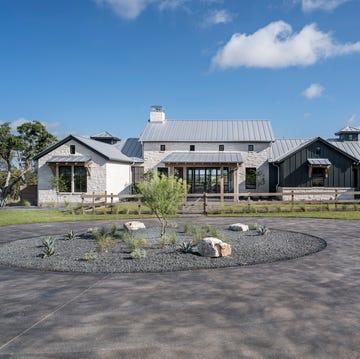
In a small space, even the slightest unsightly spot will draw the eye, so it’s important to steer the attention towards something in particular. “A focal point can be a small sitting area with a café table; it can be a birdbath or small fountain; it can be a beautiful small tree or shrub, Maeda suggests. “An interesting boulder can function like a statue and bring a moment of focus to a small space.”
Plant an “Anchor Tree”
Along the same lines as choosing a focal point, you can plant what Regina calls an “anchor tree” in your front yard, something that he says requires the most patience, but it’s the one that matters most long-term.
“A well-chosen shade tree planted in a small front yard today becomes the defining feature of that property in 15 to 20 years,” he says. “We think of it as heritage planting. Species like elms, oaks, or maples add structure, wildlife value, and seasonal presence. You're not just designing for now—you’re planting something the neighborhood will benefit from for generations.”