3 min read
Move over, Millennials—more and more Gen Zers are moving out on their own, and they’ve made it clear that they know a thing or two about how to design a welcoming, elevated-looking living space. “Gen Z is course-correcting the home,” says Sophia deDomenico, the founder of Et Sal Interiors. “They’re pulling us out of that overly styled, showroom phase that, if we’re honest, my generation, millennials, really leaned into.”
Don’t expect Gen Z homes to read super “young” or temporary, though. “Gen Z approaches design with a level of intentionality that feels unusually mature. They don’t separate beauty from utility,” says Stephanie Kraus, the founder of Stephanie Kraus Designs. “They expect both, and they expect it seamlessly.”
Want to take a cue from the younger generation as you revamp your own space? Below, interior designers highlight three of the main principles of Gen Z design, and explain why they’re so compelling.
Like one of these looks? Go ahead and adapt it—Gen Z design principles are by no means solely reserved for the under-30 set. And if you’re still left feeling a bit stuck? Use the Gen Z ethos to guide you. “You are the one living in the space, so listen to your heart and create a space that feels right to you,” says Rebecca Letwin, the founder of Full Bloom Interior Design. “Try not to be distracted by all of the noise and go with what you love, because at the end of the day, that’s what Gen Z design is all about.”
Individuality and Uniqueness

Multiple designers are quick to pinpoint Gen Z’s emphasis on uniqueness as a positive quality. “Gen Z rejects cookie-cutter interiors,” says Cody Brown, the co-founder of Bridges Brown Interiors. “Instead, they lean into individuality and storytelling.”
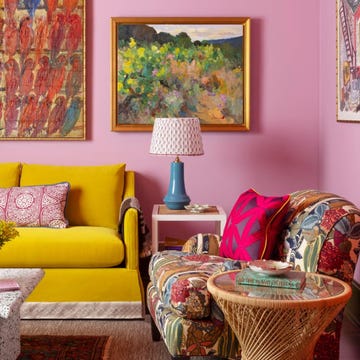
Along those lines, Gen Zers aren’t too concerned with pairing like with like to the degree that has prevailed in the past. “There’s a strong rejection of the ‘matchy’ look that dominated previous decades,” Kraus says. Rather, she explains, this generation values “personal expression over perfection.”
DeDominico expresses a similar take. “They’re mixing eras, styles, price points, prints—sometimes in ways that would make a traditional designer twitch,” she says of Gen Z. “Instead of polishing out imperfections, they are leaning in. That slightly undone, real-life feeling? That’s not a mistake, or an off day—that’s the whole point.”


One way in which Gen Zers like to practice personal expression is by shopping secondhand to source pieces that can’t be procured in big box stores. “Vintage furniture, thrifted decor, and inherited pieces feel more personal and sustainable than buying everything new at once,” says Danielle Flax, the founder of Danielle Flax Interiors. And speaking of sustainability, “There’s this mindset of ‘we already have enough furniture in the world,’ and a real awareness that cheap imitations just end up in landfills,” deDomenico adds.
A Thoughtful Use of Color

Say goodbye to Millennial Gray once and for all. Gen Zers like to use color “with restraint and confidence,” Kraus finds. “They’re not afraid of color, but they’re also not chaotic about it.”
The colors that Gen Z does use tend to fall within a “warm, layered” palette, Flax explains, referencing earth tones and warmer neutrals. “Those palettes have staying power because they feel timeless, grounding, and easier to live with long term,” she says. Adds Ashley Cartier, the founder of Ashley Cartier Interiors, “Their use of color to bring warmth and life to spaces is here to stay, and I am all for it.”
Soft Silhouettes

Curves and softer materials reign supreme among Gen Zers, and designers understand the appeal. “Rounded sofas, arched mirrors, organic tables, and softer lines are likely to endure because they make spaces feel more relaxed and welcoming,” Flax says. “They’re less harsh than boxy modernism and work across many design styles.” Kraus agrees that coziness is essential for Gen Zers, who are “bringing back warmth through texture, upholstery, and subtle pattern play.”