4 min read

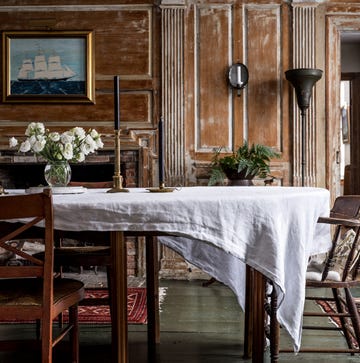
For some designers, their first foray into the world of interiors comes through their childhood bedroom, or a studious redesign of a pint-sized dollhouse. For Sarah Stacey, her indoctrination came in the form of dusty antique stores and muddy flea market fields. Long before she was layering bold color and storied antiques into richly personal interiors, she was trailing behind her parents at weekend auctions in New Orleans and Baton Rouge, absorbing a world of moss-covered statues, cast-iron gates, and hidden courtyards tucked beneath sprawling oaks. “All that texture, patina, and layering seeped into me,” she says. “I didn't realize it until recently, but so much of my aesthetic comes from there.”
If antiques serve as the foundation of Stacey’s origin story, color lends the structure. As a teenager, her parents hired an interior designer to breathe life into their new build home, and Stacey was mystified by the way she wielded color and pattern. “She used color to highlight my mom's furniture and brought out tones in the wood I hadn't noticed before,” she adds. “It was the first time I experienced what color could do and how it could make me feel.”


Though her early career was in advertising, not design, a throughline of pigment followed her wherever she went, from honing her creative instincts in art class to flexing her muscles with side projects for friends, until building her own home reignited something more permanent. What followed was a slow pivot—small projects, a brief return to school, and one early client with a $750 budget.
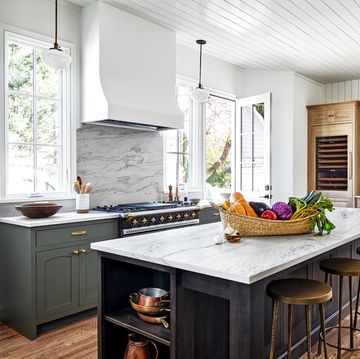
Then came the kitchen: a now-signature moment where she proposed a minty sage green at a time when white reigned supreme. “Nobody was doing color like that, and I’m so glad they went for it,” says Stacey. The risk paid off, and more importantly, it cemented her trust in her own eye. “That project really gave me confidence,” she adds. “It was one of the first times I truly trusted my instinct and saw it pay off.”
Today, Stacey’s work has that same reverence for the power of color, with a high-octane approach that finds her combining offbeat prints, bold hues, and curated antiques into one-of-a-kind spaces that reflect her clients’ personalities—and her own gusto. But beneath the visual richness is a deeply practical framework. She designs not just for beauty, but for life.
It’s a balance she holds tightly, alongside a growing, highly collaborative studio that thrives on shared ideas and thoughtful processes. “The creativity only works because the operations are solid,” she adds. “Good design just takes time—you can't go with the first idea that pops into your head. The best spaces are the ones that have had time to cook.”


Get to Know Sarah
House Beautiful: How do you define your aesthetic in one sentence?


Sarah Stacey: Bold, maximalist interiors that are intrinsically personal to each client, layering antiques and vintage pieces with rich color, dynamic patterns, and modern details into spaces that feel timeless, soulful, and just a little irreverent.
HB: What do clients hire you for that they can’t get anywhere else?
SS: They hire me because our work speaks to them the same way a piece of art does. A lot of people can make a room look pretty, but what my clients are really after is a point of view. They're also hiring me to really get to know them. How they live, what they love, what pieces they already have that matter to them. I'm not pulling a look off the internet. I'm building something that could only belong to them.
HB: What do you think the industry gets wrong about “good design”?
SS: The industry assumes good design has to be tasteful, but “tasteful” design kind of all looks the same. Great design should excite you, surprise you, and tell a story. The most memorable spaces have a fearless point of view that goes way beyond tasteful.
HB: Is there a historical era, culture, or art movement that informs your work?
SS: I'm drawn to the Aesthetic Movement and medieval influences, especially the way they embraced ornament, symbolism, and richness. There's a depth there that I keep coming back to. I'm also really inspired by the thinking behind the Arts and Crafts movement, the belief that craftsmanship matters and that beauty and utility can and should coexist. And then there's punk rock and new wave. That energy and that willingness to push against sameness, to not care if something feels a little bold or unexpected. All of it shows up in our work in different ways.
HB: What emotion do you most want someone to feel when they enter your spaces?
SS: I want people to feel held and comforted, as the room wraps around them. We've had clients describe our spaces as feeling like a portal, which I love. You step in, and your whole nervous system relaxes.