6 min read
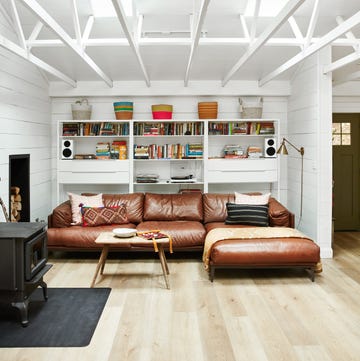
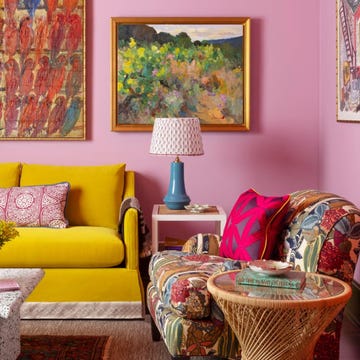
There’s now a name for the interior design style that balances the character of maximalism with a minimalistic, calming aesthetic: midimalism. This year’s Yelp Summer and Outdoor Home Trends Report refers to midimalism as playful-meets-practical and says it encompasses a sensible use of prints, patterns, and playful elements.
“The midimalism trend tells us that people are done choosing between livable and beautiful,” says Tara Lewis, Yelp trend expert.
The pull toward midimalism is “the search for equilibrium,” as Paris– and Los Angeles–based designer Marc Ange puts it, clarifying that it is a natural reaction to the ping-ponging between minimalist and maximalist tropes. “A space can feel calm without being cold, and expressive without becoming overwhelming,” Ange says. “I think many designers naturally gravitate toward that territory because it allows both clarity and personality to coexist.”
To orchestrate this style successfully, Charlotte, North Carolina, designer Louise Copeland of L.B. Copeland Interior Design advises layering patterns and textures. “It’s important for the larger elements of a room to remain relatively quiet,” Copeland explains. “Starting with more understated foundational pieces creates space for additional upholstery, artwork, and decorative accents without overwhelming the senses.” Cara George, founder and designer of Otea Textiles, points out that finding harmony is about rhythm and softness, which can be found in nature-inspired designs that avoid overtly graphic patterns. She welcomes prints in a smaller scale to “create a quieter sense of movement and texture within a room, almost like a visual backdrop rather than a loud statement.”
Los Angeles designer Hema Persad recommends finding a single print you love and using it to draw a color palette. “At Sagrada Studio, I draw the line at basically one or two patterns per space, and the rest is focused on color,” she elaborates, noting that you should stick to one to two colors as well. “Anything beyond that might start to veer into maximalism.”
Read on to see how interior experts interpret midimalism to create restorative spaces that are still packed with personality.
Dip Into Pastels

One way to venture into midimalism is to pair pastels, such as barely there celadon green, with other soft hues, like a white oak table and a white plaster chandelier, as seen in the space above. The combo creates an airy effect that allows sculptural lighting and abstract art to speak.
“There’s color, personality, and layering, but the overall atmosphere still feels calm and breathable,” says New York architect and Dunham Robinson partner Rachel Robinson. “The softer palette also allows the lighter furnishings and fixtures to feel almost weightless within the space. The white dining chairs and chandelier read as crisp and sculptural against the celadon backdrop, whereas in a pure white room they might visually disappear.”
Find a Focal Point

You can borrow a midimalism design principle from Greydon House, a former sea captain’s house turned boutique hotel in Nantucket, Massachusetts. The eye immediately focuses on the curvy Roman and Williams custom-designed metal bed and block-printed John Robshaw bedding, anchored by vibrant throw pillows in a contrasting cobalt and red pattern. The rest of the space is easy on the eyes thanks to white wood paneling and neutral window shades.
Frame It

L.B. Copeland Interior Design interprets balance as “giving the eye moments to rest.” Case in point, lead designer Louise Copeland subdued the teal chinoiserie murals in the above space by inserting them into frames.
“By framing the wallpaper in large panels, it almost functions as artwork, bringing energy, scale, and personality to the space while the surrounding walls, millwork, and furnishings remain relatively restrained,” Copeland says. The same strategy can be applied to floor-to-ceiling shelving. “Leaving visible space at the back of the shelves allows the eye to distinguish individual objects rather than reading everything as visual clutter,” she explains. “That sense of negative space can make even heavily layered interiors feel more intentional and calm.”
Designate One Area to Maximize Moments

“Midimalism is about understanding the power of restraint,” says New York interior designer Max Aboody. For an entry, he used an energetic painting, vintage Murano glass sconces, and several art objects on the credenza to create a curated display. But it is the Louis Venturelli chair that is the crowning piece.
“Light and airy, full of angles and geometry, sitting next to a heavy credenza with exaggerated curves, and that tension pushed the room past minimalism without overwhelming it,” Aboody says. The designer also notes that rotating and swapping out pieces creates a welcome impermanence that allows the room to breathe and be noticed.
Add Unexpected Texture

When designers recommend adding texture, this usually takes the form of throw pillows, blankets, and sofa upholstery. But for the owner of Colleen Rosar Design, in Brielle, New Jersey, tactile texture is amplified through the Phillip Jeffries fringe wallcovering she used at her recent installation at the Kips Bay Decorator Show House in Palm Beach.


The neutral hue of the raffia material offsets the pink plates and allows the throw pillow to act as its whimsical cousin. “People are increasingly drawn to interiors that feel collected rather than cluttered and curated rather than sparse,” Rosar says.
Use Marble as a Power Player

With midimalism, you want to accomplish “richness without excess,” says Lynn Berney, cofounder of LTA Interiors, who worked on the above project. “The stone vanity introduces movement and drama, while the scalloped detailing softens the architecture and adds a touch of whimsy.” Berney further explains that adding a sculptural mirror and a lacquered ceiling is a way to elevate the clean lines of the bathroom space with artistic flair.
Unlike tile, marble is a bit of an enigma and can play into design with as much, or as little, presence as you’d like. “Calacatta Viola marble, for example, has a crazy range,” says Zach Epstein, president and chief product officer at Artistic Tile. “One piece can be very creamy with just a few spots of purple—or it can be full of large swirls of wine and pink.” As a result, natural stone can look minimalist or bring out a dramatic countertop, particularly if you add a scalloped waterfall moment, as seen here.
Amplify With Shapes

A calm and restrained palette endows a sense of serenity, but adding layered sculptural forms and fiber art creates a striking space. Heather Weisz of HW Interiors in Wellington, Florida, brought in a pool table with an almost abstract silhouette, wood paneling, and artful lighting above to create depth.
“Nothing feels overdone or unnecessary,” she says. “Instead, the interest comes from shape, texture, scale, and craftsmanship. The restraint allows each element to be appreciated individually.”
Create a Cohesive Palette

Impact doesn’t have to stem from dozens of moving pieces that compete with each other.
“When everything is pulling in the same direction, you can add a lot of complexity without the room ever tipping into chaos,” says Aboody of building a layered look for a Brooklyn bedroom. “There are multiple patterns in the bedding and bolster pillow, but everything lives within the same color story. I started with a cool color wash and slowly worked warm tones in until the room felt balanced and alive.”
Employ Accessories as a Balancing Tool

To find the middle ground, Jackson, Mississippi–based designer Claire Thompson aims to make a space look lived in.
“We tend to practice minimalism in the architectural elements and the furnishings and save the accessory styling and artwork to pull in the balance of a more maximalist feel,” says Thompson, who is a minimalist at heart but admits that surfaces need to feel collected to keep the polished architecture and clean-lined upholstery from feeling too static.
Take the artwork over the fireplace in the above space; the floral relief practically begs a closer look as it echoes the botanical on the throw pillows and rug.