4 min read
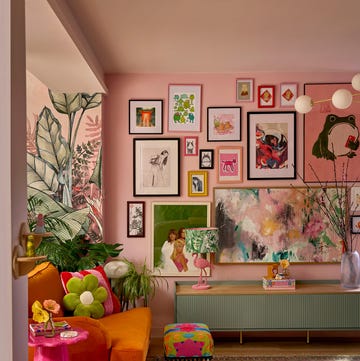
Gallery walls have been in style as long as art galleries have been in existence (read: that’s a long time!). As you sift through Instagram, a gallery wall can look deceptively easy to put together—but creating one can actually be a bit of an art in itself.
“Gallery walls are an opportunity to give special photos and other items a more prominent place in the home,” says Grace Brackman, associate designer at Maggie Griffin Design. “Executing it properly will ensure that it feels like an elevated part of your overall design, as opposed to something that may feel busy or cluttered and is disjointed from the rest of the home.”
But a gallery wall can be worth the effort. Leah Hook, founder and principal designer of Gray Oak Studio, says that a gallery wall can be the single most entertaining aspect of a person's home.
“Gallery walls are inherently unique and personal. The personal aspect shares a story about the homeowners that is authentic,” she says. “The art we choose to frame, the frames we choose to hang, and the configuration we thoughtfully plan is one-of-a-kind. Just like our homes, just like us.”
If you’d love to execute your gallery wall flawlessly and avoid the mistakes that people commonly make, read on.
Inconsistent Spacing

Gabriela Eisenhart, founder and creative director of Gabriela Eisenhart Interiors, says that even when hanging a gallery wall organically, she likes to follow a formula where there is a consistent distance between the frames.
“Obviously, when hanging in a grid, the spacing must be uniform. But even with a more organic layout, you still need to create structure,” she says. “I prefer to start with my center pieces and build outward from there, making sure the spacing between each frame feels visually consistent so the gallery wall reads cohesive rather than chaotic.”
More specifically, Hook says that her gold standard is hanging artwork two to four inches apart on all sides.
“Once you get eight inches or more apart, you risk creating too much negative space, and the grouping can look disjointed,” she adds.
Only Hanging Photos
Brackman says that oftentimes, people think gallery walls are exclusively for photos—but that’s not the case.
“For a more formal look, a framed intaglio is beautiful in a grid in a dining room. Pages from old botany books are a great way to add color and interest on a large wall in a primary bedroom,” she recommends.
A Lack of Cohesion

While you can certainly go the eclectic route with your gallery wall, a cohesive one tends to be more aesthetically pleasing.
“Your gallery wall doesn't need to match perfectly, but there needs to be a connection among your pieces,” Eisenhart says. “Think about frame styles, colors, art style, or scale. Your goal is for your eye to flow when you look at the wall.”
Overlooking Scale
“Scale tends to be a frequent problem in hanging a gallery wall,” Brackman observes. “Don’t be afraid to really fill the space, particularly in hallways. Family photos tend to be 8-by-10s or smaller, so a great way to increase the size is by adding a mat to your photos when framing. That can increase the overall dimension and really help with the scale.”


Eisenhart emphasizes ensuring that you fill 70 to 75 percent of the wall when creating the perfect grouping of art.
“Too many small pieces on a large wall can look cluttered or as if they are floating in space,” she further says.
Too Many of the Same Frames
Hook believes that not enough frame variation can be a downfall of gallery walls.
She says, “Bringing together a range of frame styles, mats, sizes, and a mix of finishes or colors is a key part of a beautifully executed gallery wall. The variation feels thoughtful, curated, and interesting.”
A Cramped Hanging Area

You might be creating your gallery wall within a hanging area that’s too small.
“Cramming a group of framed pieces on a tiny wall does not end well,” Hook says. “While you don't want too much blank space between frames, you do want healthy blank space on all four sides of the gallery: top, bottom, left, and right. This accentuates the grouping and helps to create the feeling of a single moment.”
Hanging the Pictures Too High
You might also be hanging the cluster of pieces too high.
As Hook says, “The midline of your gallery should be at approximately 60 inches. Your gallery needs to be grounded by the surrounding space or by the furnishings it hangs above. If it's too high off the floor, it feels floating and awkward.”
Not Including Unframed Pieces
“Gallery walls are not just for framed items,” Brackman says. “Don’t be afraid to mix in some other items on your walls, especially if you are looking for a more collected and organic look. Using found objects from trips, plates, or ceramics, and even mixing in some brackets could be fun!”
Not Having Fun

Hook believes that some people just don’t have enough fun with their gallery wall.
She says, “The content of your gallery wall is your moment to share what you love with the people who visit your home. Think of it as a glimpse into you. Maybe you're colorful and optimistic. Maybe you're a traveler. Maybe your family is obsessed with dogs. Each piece doesn't literally have to represent your favorite hobby or a long-lost relative—you can simply see a beautiful painting and fall in love. Take time to find special pieces.”