3 min read
Depending on where you grew up, Greek life—the world of sororities and fraternities—might be something you know well or barely encountered at all. Having grown up in South Carolina and joined a sorority in college, I thought I was pretty familiar with its customs. Yet social media still introduces me to campus traditions I’ve never heard of. Every year around college admissions season, TikTok sparks plenty of questions about one especially unexpected feature: sorority cold rooms.
Sometimes called sleeping porches or cold air dorms, these communal bedroom areas can be found in certain larger sorority and fraternity houses at schools including Indiana University, Purdue, and the University of Washington. Typically situated in an attic or basement, the rooms contain rows of bunk beds reminiscent of barracks and give members a dedicated place to sleep at virtually any hour.
Cold rooms are kept dark around the clock, usually with little to no overhead lighting and blackout curtains that remain closed throughout the day. As their name suggests, they’re also maintained at unusually low temperatures. Air conditioning may run so intensely that residents may need electric blankets and heating pads. At Kansas State University, for example, cold dorms are routinely kept at a chilly 62 degrees. Because these spaces are reserved strictly for sleeping, members keep clothing, school supplies, and other personal belongings elsewhere in the house.
One TikTok user, a former Kappa Kappa Gamma at Purdue University, took to the app to explain her experience. “It’s one big room that’s really cold and really dark; you make it the coziest space possible,” she says in one video. “At one point, I had a bed in the cold room, a closet in the hallway, and a desk downstairs. I loved every minute of it.” She goes on to say that KKG’s cold air dorm was built as a necessity to house the larger incoming pledge classes, sometimes up to 90 women who were all moving into the sorority house at one time.


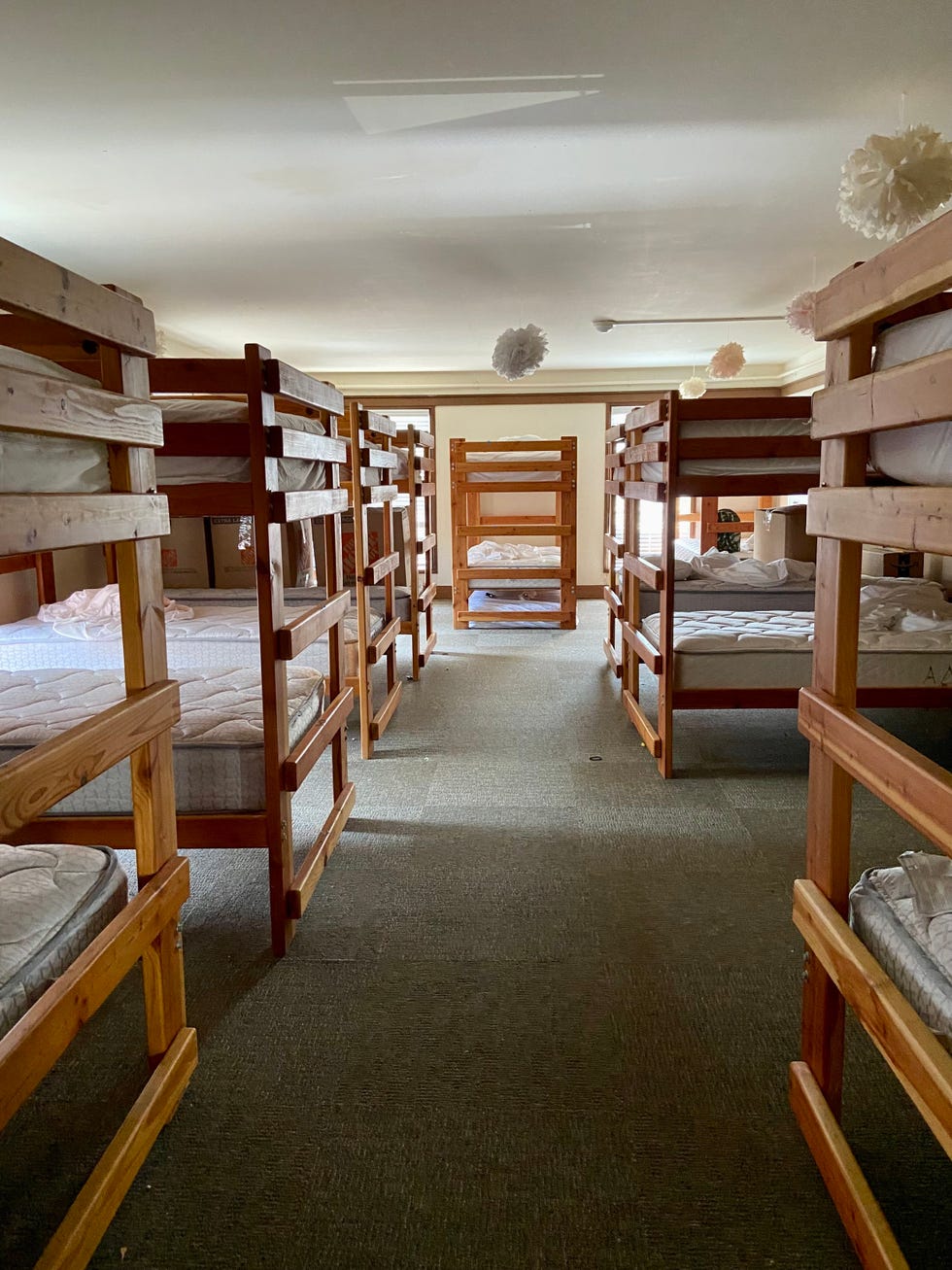
Caroline Lassman, an alumna of Kansas State University, slept in her sorority’s cold dorm for two of her three years in the house. Some bunks were more coveted than others. “Bunks were assigned based on a ‘points’ system,” Lassman told us. “We gained points by having a good GPA, participating in community service events, helping out the sorority for events, etc. From there, we were able to pick whether we wanted the top or bottom bunk and at what part of the room. You’d typically want to be in one of the farther corners so you weren’t by the door that was opening/closing all the time.” Other than the cacophony of morning alarms that would all go off at once, Lassman recalls those rooms being a very peaceful place to sleep.
These odd sleeping arrangements have historical roots. In the early 1900s, sleeping porches were just that: A screened-in porch with beds rather than traditional porch or living room furniture. Because older homes were built to trap warm air in the winter, summers could be stifling, especially in the Southern United States. Sleeping on the porch was a chance to make the most of a cool night cross breeze.
Today, of course, central air conditioning has made sleeping porches far less necessary—but the concept still has its appeal. Plus, if you have trouble sleeping, sharing a pitch-black, cold room filled with your best friends might be exactly what you need to finally get some well-deserved rest.