 By
By  3 min read
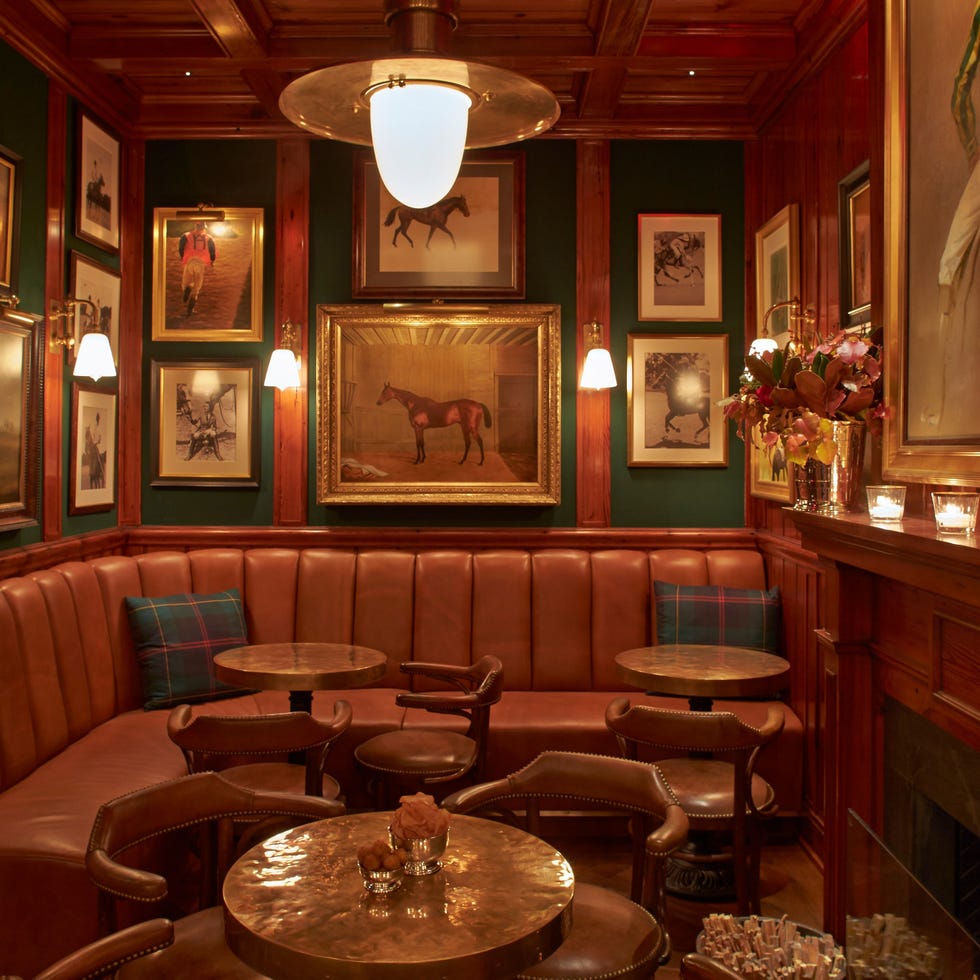
Back in 2015, when I was a young magazine editor living in New York, I made a design decision I regretted almost immediately (and no, I didn't get bangs). I decided to paint our primary bedroom a moody, Ivy League–worthy hunter green. Ralph Lauren’s Polo Bar had just debuted on East 55th Street, and after seeing it flood my Instagram feed, I imagined myself ending each evening with a glass of Ardbeg and an impossibly dense novel in a room that felt equally sophisticated.
Reality hit fast. "DIY," as I quickly learned, can just as easily stand for "Don't! It's yech." Despite several coats, the paint went on in thick, gelatinous streaks, leaving the walls looking less stately clubroom and more underwater jungle. The green cast did my fair Irish complexion no favors either—it was no longer a dewy porcelain but sickly and pallid.
We tolerated it far longer than we should have. Then, on Election Day in 2016, in need of a constructive distraction, I reclaimed my sanity by repainting the room a soft, glow-enhancing peach. Lesson learned: what looks atmospheric and alluring on Instagram doesn’t always translate to real life.
It's a lesson I imagine hits home (pun intended) for many of us, given how important Instagram is in the design community. Does it fuel creativity or stifle it with the same paint colors and furniture? For design lovers, is using Instagram for inspiration like taking a photo of your favorite celebrity with you to get a haircut—that is, inevitably disappointing? I shared my thoughts with six pros in different parts of the country to get their take.
"I truly believe that Instagram is both a powerful tool and an endless fountain of information," says Houston designer Paloma Contreras. "The key, however, lies in our ability to discern information and maintain our own point of view and perspective through the barrage of imagery that we are presented with each day."
In short: Did I even like a deep green space, or Chinoiserie ginger jars, or botanical prints—or had I simply been fed a steady diet of them so frequently that I'd developed a taste for them?


"It's just this almost turnstyle thing that you see over and over and over, and to me there are a lot of accounts—even by some people who are leaders of the design industry—that are turning out this mediocrity," says Charleston designer Jacob Laws. "It's frankly insulting to clients, I would think, because it's saying, 'Here's this boring design I've already done 27 times, and you're boring, so here you go.'"
Still, Laws and every other designer I reached out to for this piece said Instagram isn't ruining design—far from it. You just have to know how to use the app to your advantage.
"On Instagram, you can either produce original content or duplicate it," says Newark, New Jersey–based designer KD Reid. "For designers, Instagram has been a crucial tool for sharing, sparking, and reaching new audiences…As a designer, I strive to produce novel, innovative, and fresh ideas that inspire."
Charlottesville, Virginia–based designer J.P. Horton finds it to be a treasure trove of information and inspiration. "If anything, it has been a great tool for me to network with my peers, discover new vendors, and become exposed to others' design work, past and present, that I may not have had access to off the platform."
You also have to remember that Instagram content is heavily filtered—even if it's labeled #nofilter. Even so, the benefits may outweigh the downsides. "Overall, I think Instagram is more inspirational than soul-crushing," says Washington, D.C.–based designer Annie Elliott. "Feeds are dominated by intensely styled rooms, precise vignettes, and candid-but-not-candid lifestyle photos, for sure, but I think there's an understanding that Instagram isn't real life."
Case in point: I never once posted a photo of my green bedroom.