3 min read
The above powder room was designed by Cary Ray Interiors and features a custom soapstone countertop and sink.
Though tiled sinks are the statement-making bathroom trend back in the mainstream, beautiful countertops made of natural stone or stone-like materials will never go out of style—and for good reason. These types of countertops are extremely versatile; they can make a bold statement or serve as a subtle supporting feature. And while there are many stunning options out there, you have to be practical when choosing the best bathroom countertops for your home.
Affordability comes first, obviously—a countertop material might fit your aesthetic perfectly, but it won’t matter if it doesn’t fit within your budget. And it’s important to know how it will age, and decide whether or not you’ll be happy with its patina. Some countertop materials stain easily, especially lighter, more porous materials, so choosing something that fits into your habits and lifestyle is key. There’s a lot more to think about when considering the best bathroom countertops than solely aesthetics.
We asked interior designers to outline the pros and cons of popular countertop materials, like quartz, marble, and granite, so you can narrow down which ones would be best for your home life. Keep reading to find out more about these beautiful features.
Additional copy by Meghan Shouse.
Marble
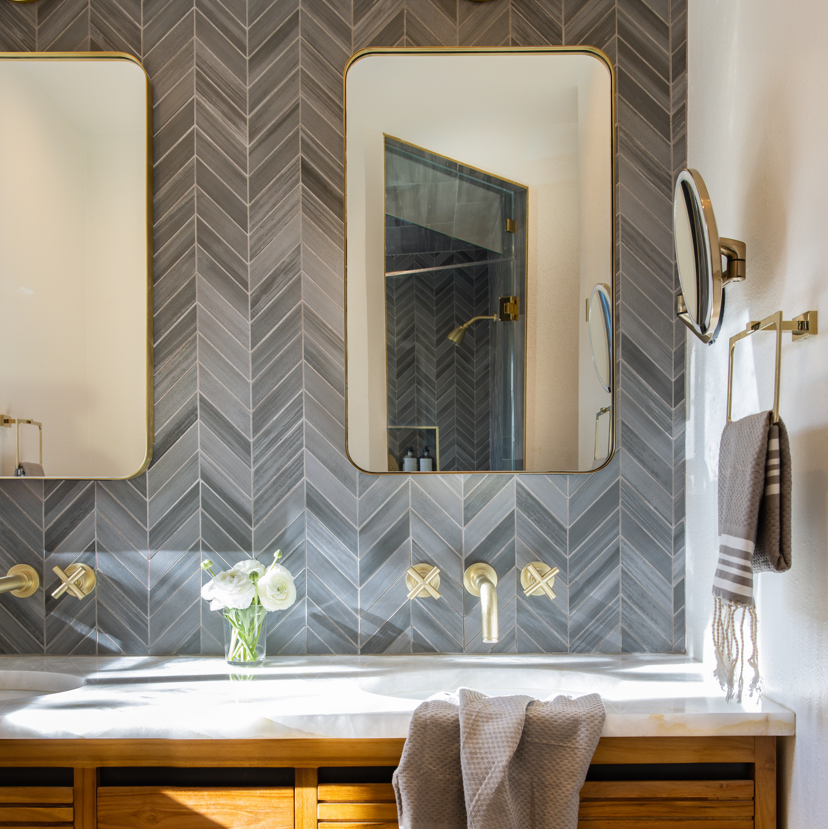
With so many varieties to choose from, marble can suit pretty much anyone’s taste, and it’s a classic and timeless choice, says Lindsey Black of Memphis, Tennessee–based Lindsey Black Interiors. You can go bold or more subtle. It will age, and it can stain or etch, though.
“I most often prefer marble in a bathroom for its timeless look,” Black says. “I feel you can never go wrong with it, and I personally love how it ages over time and gives a 'lived-in' feel to a space.”
Marble is incredibly versatile, agrees San Francisco–based interior designer Naomi Rigas of Envy Interior Design Studio. Depending on whether you choose a light or dark color or a more or less dramatic veining pattern, marble countertops can really set the mood of a bathroom.
Just be prepared to keep a hand towel nearby to wipe up excess moisture from hand and face washing, says Rigas. Resealing regularly will keep your countertops looking like new for longer, she adds.
Quartzite
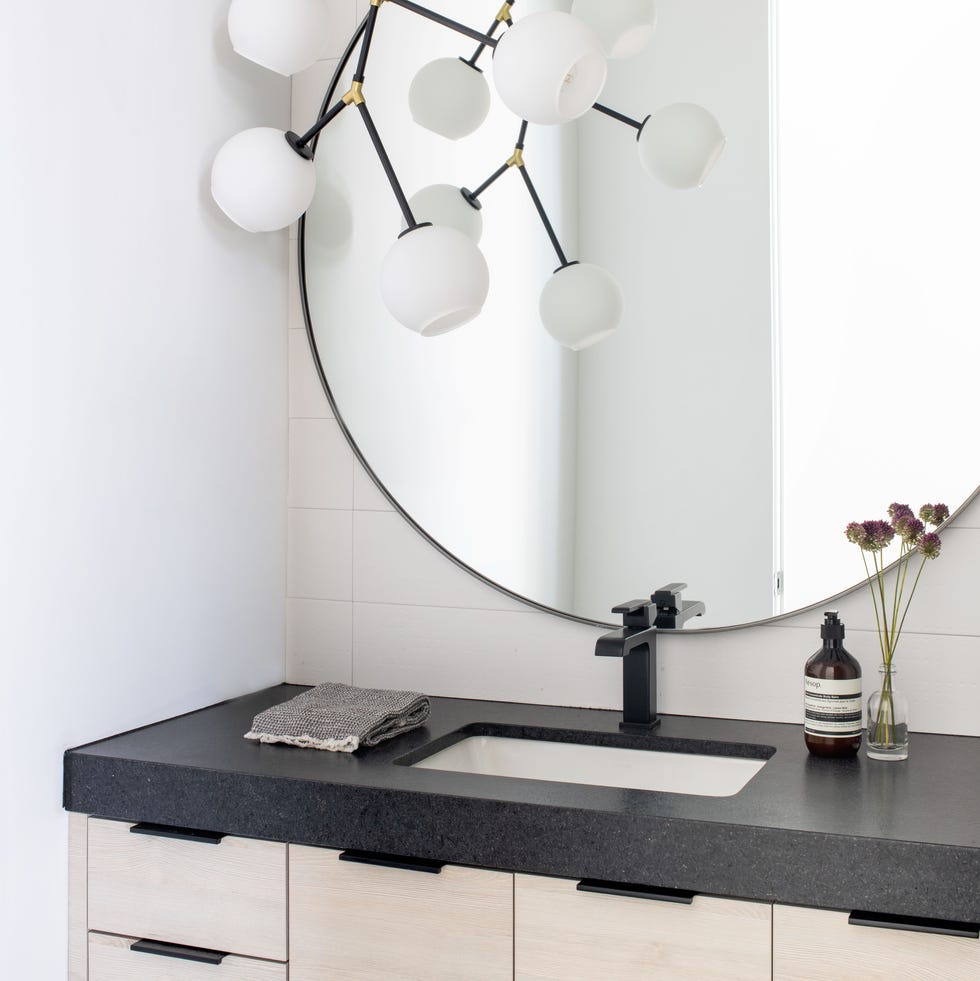
Quartzite looks a lot like marble and comes in a variety of colors. But it’s an incredibly dense stone, so it holds up better than more porous alternatives like marble, says interior designer Momoko Wong of Denver-based Momo Wong Design. “It’s also so elegant and beautiful, with its appearance of movement as well as the crystalline sparkle throughout,” Wong says.


The downside? Quartzite tends to be one of the more expensive slabs of stone. More pure white crystal-like quartzite can go for $10,000 per slab, says Rigas.
Granite
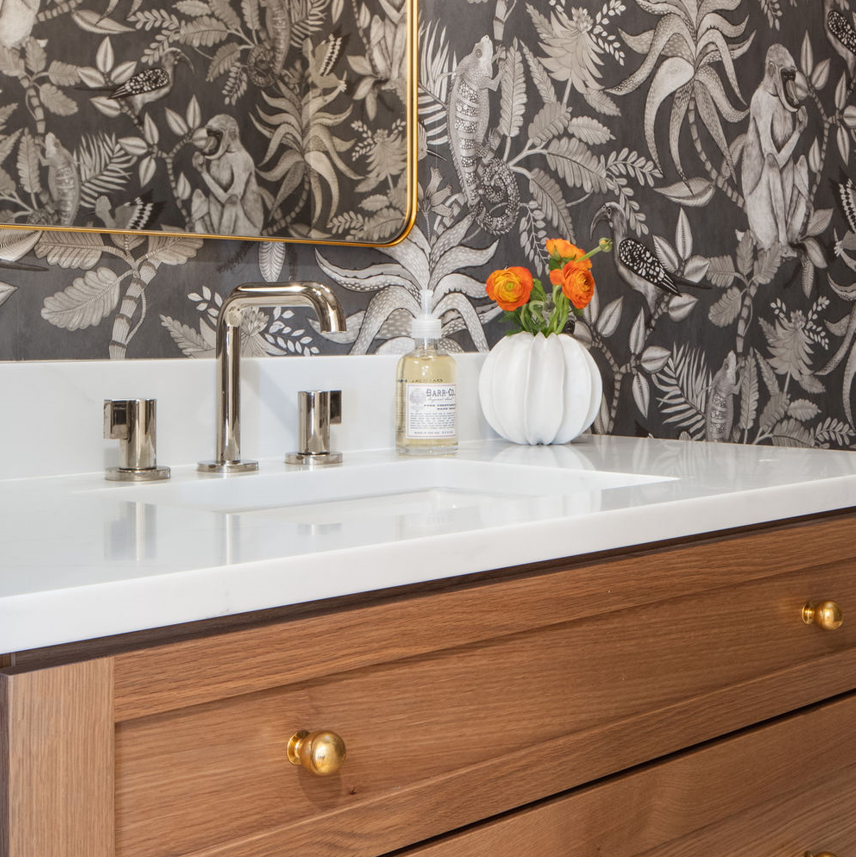
Granite is a popular pick for bathrooms partly because it costs less than other materials and is easy to clean. But it’s also a workhorse. It’s dense, it won’t etch or stain as easily as marble, and when you find some unique slabs, it can create a wow moment, Wong says.
Quartz
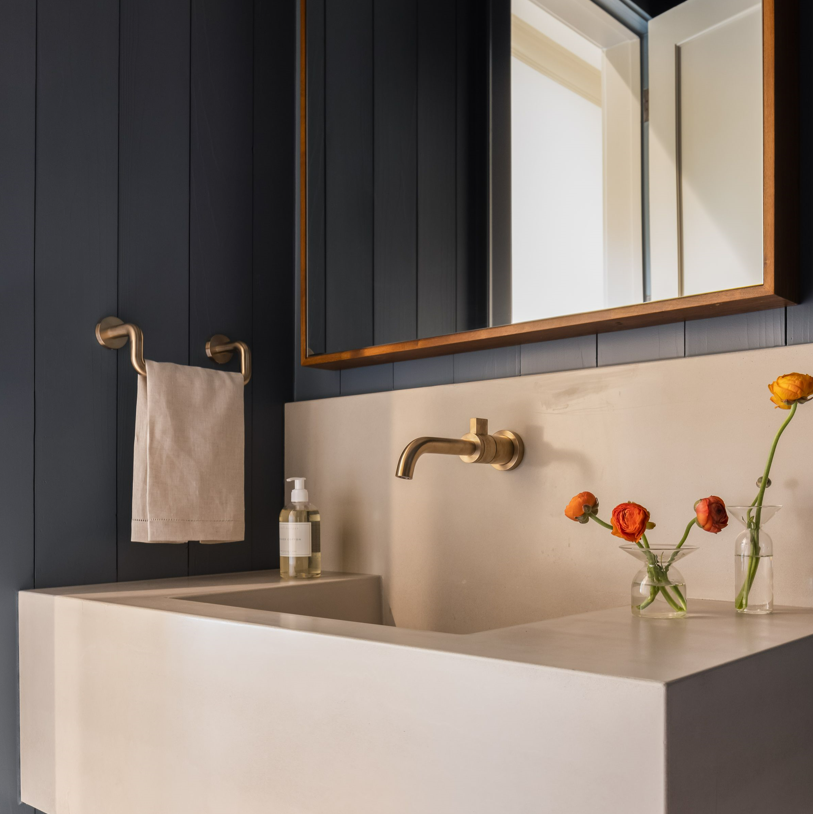
Let’s tally the pros: Quartz is low maintenance, resilient to staining and etching, and always looks new, Black says. It’s a good option if you're looking for more of a background accent, she says; it isn’t the star of designs. While marble and quartzite are usually the contenders in a popularity contest, Black is seeing a trend toward using quartz that more strongly resembles natural materials.
Concrete
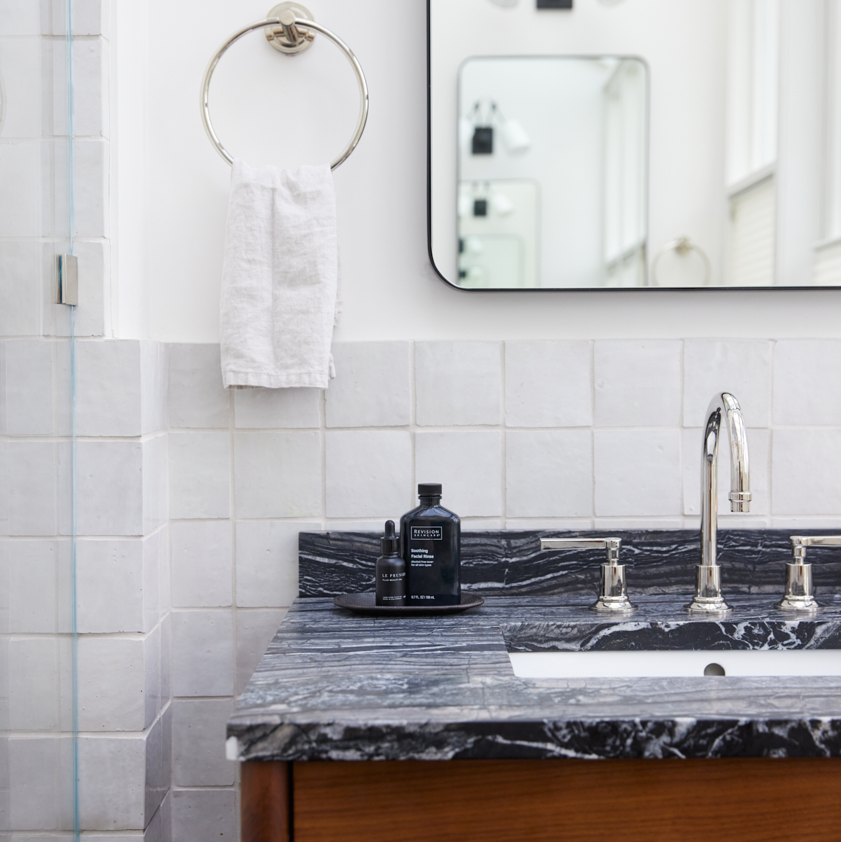
Concrete can lean industrial or be more polished in appearance, Black says. It's durable, comes in a variety of colors and shades, and it’s highly customizable. It is a super-heavy material, which you need to be mindful of when designing the vanity or floating supports, Black says, and it can stain if it's not sealed. She likes concrete as an option for a pool bathroom because it feels unique. Concrete also works well in a damp environment.
Soapstone
Designers Lissette Fernandez and Chelsea Murawski of Together Home love working with soapstone, which they call the “little black dress of bathroom countertops” because it can be dressed up for a primary bathroom or down for a kids’ bathroom. Their suggestion: Embrace the stone’s moodiness. It comes in a range of colors from gray to almost black. “We love contrasting the earthy, graphic element of the soapstone with polished nickel hardware,” says Fernandez. It’s pretty indestructible, but you need to reseal it once a year.