
Bay windows welcome in a generous wash of natural light and add a handy bit of floor space, but their awkward angles can make furniture placement tricky – so much so that they often end up reserved for a lone houseplant or ignored altogether.
A good bay window design comes down to proportion and purpose. The best approach starts with what the room needs most – additional seating, a compact dining spot or a practical place for a desk, for instance.
The guide that follows touches on furniture layout, window treatments, some essential measurements and the odd flight of decorative fancy...
1. In a living room


In a living room, a bay window is often the best place for extra seating, especially when other walls are interrupted by doors or fireplaces. A low-backed sofa works well in a wider bay – low so as not to block any light – while two compact armchairs suit a deeper recess.
If you choose to place a sofa in front of your window, take full advantage of the hidden space behind. You can usually tuck away a whole sideboard or trunk beneath the window sill, which will do away with living room clutter and act as a surface for decoration or task lighting.


Armchairs are best angled slightly towards each other and towards the rest of the room, with a small table between them if space allows. Open arms, exposed legs and compact frames will make the arrangement feel lighter.
Use a rug to connect the bay seating with the main arrangement to avoid the dreaded floating furniture effect.
Things to note
- Two different armchairs can look cohesive when they share a similar seat height or upholstery colour and the mismatch is usually a nice one.
- Avoid filling every corner of the bay. A little open floor around the furniture will make the whole room feel larger.
- Always allow a minimum of 10cm behind upholstered furniture for airflow.
2. In a dining room
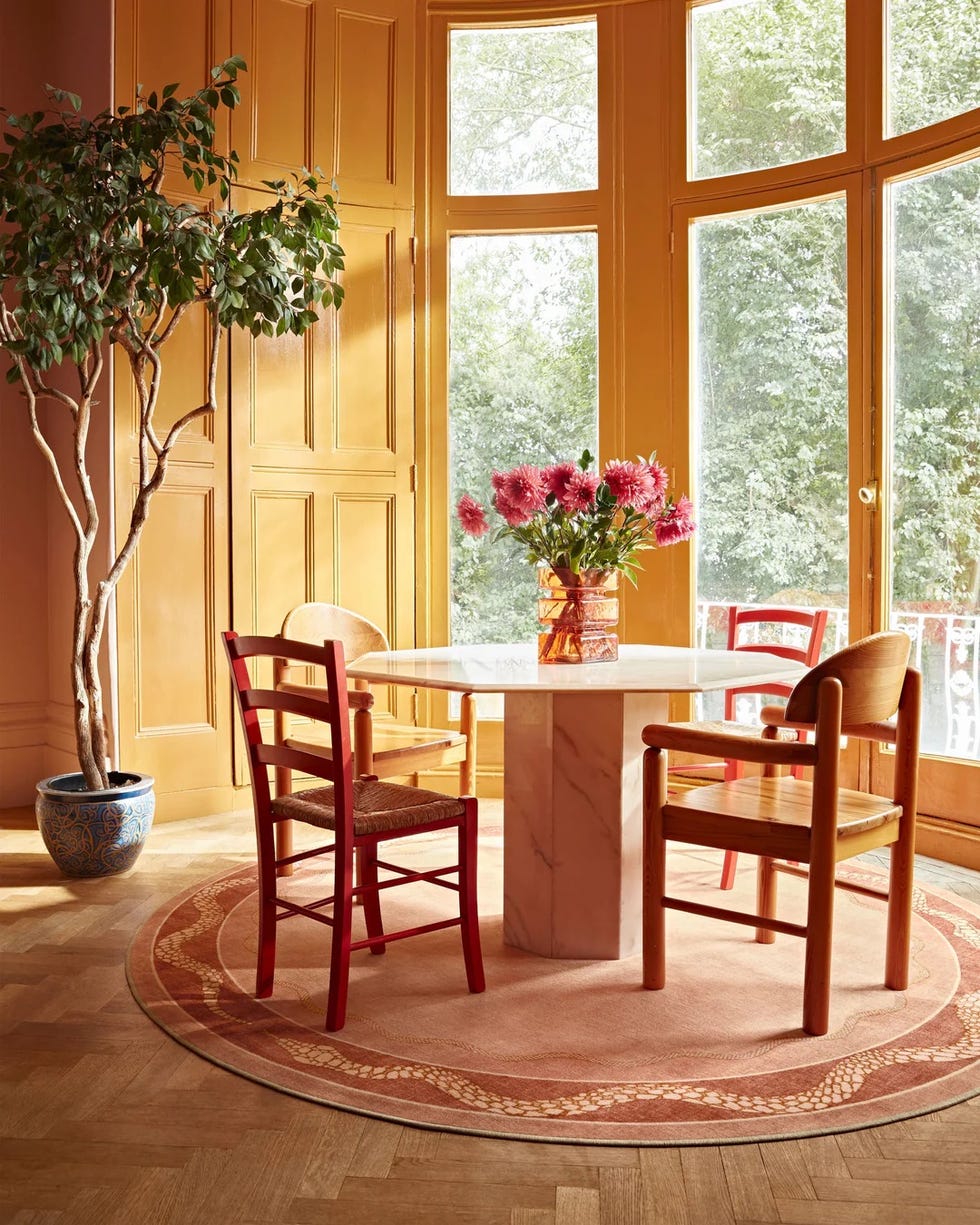

A bay window can create a well-defined dining area, especially in an open-plan space.
Round and oval tables suit the angles of the bay and leave fewer corners to navigate when chairs are pulled out, and a pedestal base gives diners more legroom and makes it easier to add an extra chair when needed.
A pendant light above the table helps establish the dining zone within a larger room, so too does a round rug – just ensure it's large enough for the chair legs to remain on it when pulled back. Something washable is advised.
Things to note
- Allow around 75cm between the table and window to manoeuvre behind your chairs comfortably.
- Use blinds with washable or wipeable fabrics – especially with little ones around.
- Protect wooden tables from prolonged direct sunlight, which can fade the finish.
3. As a window seat


A built-in window seat is arguably the most charming use of a bay and often becomes the favourite spot in the home.
Aim for a finished seat height of around 45cm, while a depth of 50 to 60cm is enough to lounge around properly. Drawers or a lift-up lid is helpful to contain items that might otherwise migrate around the room.
Use a firm foam base – something made-to-measure will cope nicely with angled walls – rather than covering the whole thing in a landslide of scatter cushions. Hardwearing upholstery is essential, especially if pets or children are regular visitors.
Things to note
- Include removable ventilation grilles if heating is housed within the joinery.
- Choose cushion covers with zips so they can be cleaned or replaced easily and use fade-resistant fabric if the bay receives strong direct sunlight.
- A cantilevered wall light can make the seat more useful after dark without taking up any floor space.
4. Creating the perfect window dressing


Combining full-length curtains with café curtains gives a bay window privacy, light and softness.
The café curtains cover the lower panes, which is especially helpful in rooms facing a pavement or neighbouring houses. Use a lightweight cotton, linen or voile for the café layer so daylight can still filter through.
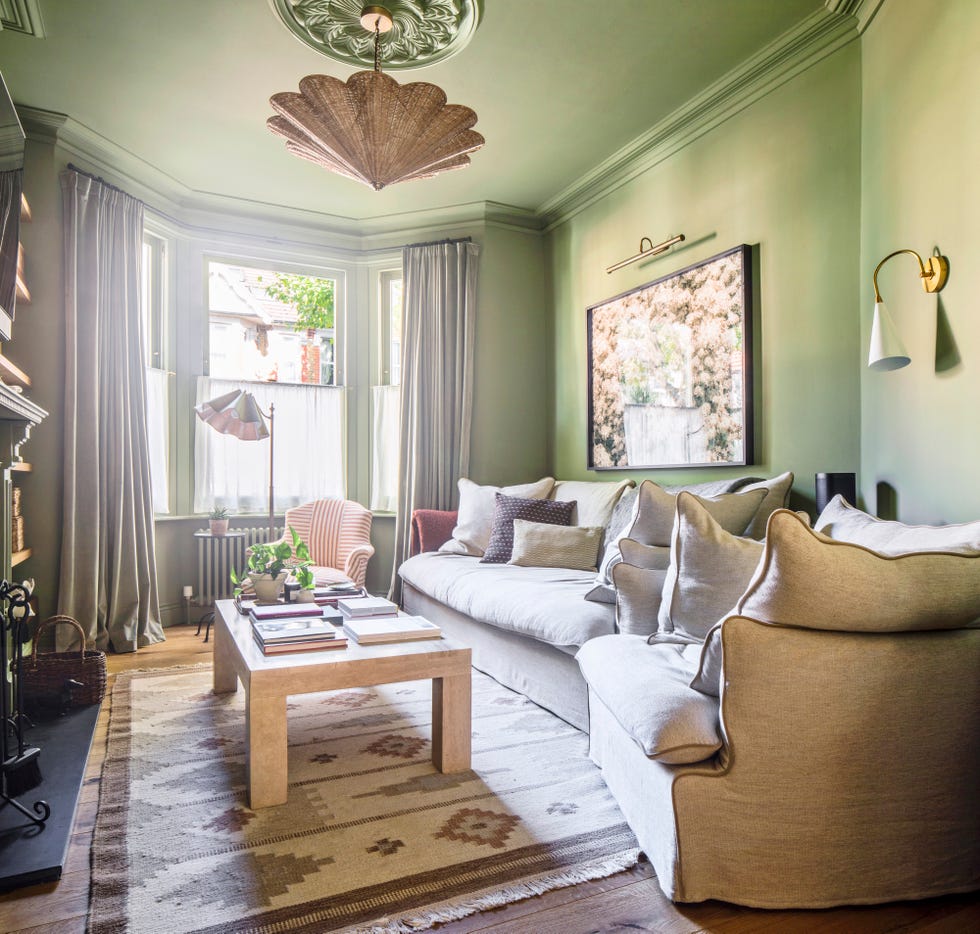

The full-length curtains can be heavier, particularly where warmth or glare from street lights are a concern. Fix them close to the ceiling to emphasise the height of the bay, and allow them to fall in generous, uninterrupted folds. Curtains that match the colour of your walls creates an enveloping feeling and a contrasting colour gives the bay a stronger outline. Both are fabulous.
5. Something unexpected


A freestanding bath in a bay window sits firmly in wishlist territory, but we can still dream.
The broader idea is much easier to borrow – use the bay for a feature that feels slightly indulgent. That might be an elaborate dressing table or a vintage chaise longue for somewhere to retreat. Music lovers could add a record player and one excellent chair, or the crafting-inclined might add a table for their projects.


