5 min read
Rugs are one of those design elements that seem simple to shop for—until you actually have to pick one, that is. They’re meant to ground a space, soften it, and tie everything together, but when something’s even slightly off, the whole room can feel unfinished. Too small, and the rug looks like it’s floating. Too busy, and it competes with everything else going on in the scheme. Too safe, and it disappears entirely. Somehow, this one piece ends up carrying a lot of weight.
I’ve learned this the hard way. After years of swapping rugs in and out while testing everything from natural jute to bold, patterned styles, I’ve realized there’s a real strategy behind finding one that actually works. It’s not just about what looks good in the moment, but how it fits your layout, your furniture, and the way you live in the space day to day.
If you’ve ever rolled out a rug only to immediately second-guess it, you’re not alone. The good news? Designers have a clear set of rules they swear by to get it right every time. We tapped the pros for their go-to tips on sizing, placement, layering, and choosing colors and patterns that won’t feel dated a year from now.
Read on for everything you need to know before shopping—and how to finally land on one that makes your space feel complete.
Get the Size Just Right

If there’s one rule designers will repeat over and over again, it’s that size matters. The most common mistake people make is choosing a rug that’s too small, which instantly throws off the entire room. “A rug should anchor a space,” says designer, co-founder, and creative director of Armadillo, Jodie Fried, explaining that it acts as the foundation that gathers everything together and draws you in. “When it falls short, the effect is the opposite,” leaving the room feeling untethered, like something’s missing. Interior designer Jennifer Stephan echoes this, noting that a too-small rug “instantly makes a room feel disconnected, like the furniture is floating instead of anchored.”
In a living room, at least the front legs of all major furniture pieces should sit on the rug. For dining rooms, the rug should extend far enough beyond the table so chairs stay on it even when pulled out. And in bedrooms, aim for a rug that frames the bed generously rather than one that barely peeks out underneath.
While a too-small rug is the most common mistake, going oversized can throw things off just as quickly. Interior designer Samantha Mayo notes that “rugs shouldn’t run wall to wall.” Instead, they need a bit of breathing room to “keep the space feeling balanced.” Leaving about 18 to 24 inches of exposed floor around the perimeter, especially in rooms like dining areas and bedrooms, helps frame the layout rather than overwhelm it. “That margin gives the eye a place to rest and allows your flooring to show through,” says Mayo, creating a layered, intentional look instead of one that feels boxed in.
Take Furniture Into Consideration
When choosing a rug, it’s less about the size of the room and more about how your furniture actually lives in it, Stephan explains. Essentially, your rug should work with your layout, not just fill empty floor space. “It’s less about the room size and more about how the furniture sits within the room,” which is why rugs work best when they help carve out intentional zones, like a living area or dining setup. It might feel counterintuitive, but going a touch larger can actually open things up visually. “Even in small rooms, go slightly bigger than you think—it actually makes the space feel larger,” advises Stephan.


Opt For Texture

Bold patterns can be tempting in the moment, but they don’t always have the longest shelf life. Once the initial excitement fades, they can start to compete with your space rather than complement it. For a look that lasts, Fried recommends leaning into pieces with “a sense of quiet character,” where subtle color variation and natural texture do the heavy lifting. These types of rugs “settle into a room without overwhelming it,” creating depth without demanding attention.
Materials like jute, hand-knotted wool, and flatweaves bring that layered, lived-in feel while staying versatile enough to evolve with your space over time. “Palettes that stand the test of time are those drawn from the earth,” Fried adds, pointing to “organic, natural tones that soften a space and shape it into something that feels both grounded and quietly restorative.” The result is a room that feels warm, cohesive, and never overdone.
Pay Attention To Shape
Layering rugs can instantly elevate a space, but the real secret lies in paying attention to shape and proportion. “I like to begin with a neutral base, something that gently frames the room and brings a sense of clarity and balance,” says Fried. That base (often a larger jute, sisal, or flatweave) should echo the shape of your furniture layout, creating a clean foundation. From there, Fried adds “a smaller, thoughtfully proportioned rug” on top, which is where you can introduce subtle texture or a soft pattern without overwhelming the room.
To make it work, the top rug should feel intentionally placed, not random. Stephan recommends keeping the base rug larger by 12 to 18 inches on all sides and maintaining a “low contrast” palette so the layers don’t compete. “Only one rug should carry visual weight,” she notes, which is why the top layer should be the focal point. Be sure to also think about how the shapes interact. A rectangular base with a slightly smaller rectangular or even an offset top layer can add dimension while still feeling cohesive. Anchor the look by placing your coffee table fully on the top rug, and let larger furniture sit on the base or overlap both, so everything feels connected, not scattered.
Reach For Imperfect Patterns

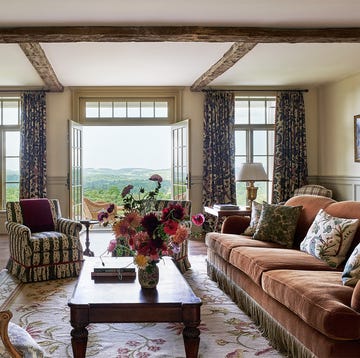
When it comes to patterns, the goal isn’t perfection—it’s personality. Stephan explains that “a rug feels timeless when it supports the room instead of trying to be the star of it,” which is why overly bold, trend-driven designs can fall flat over time. Instead, she points to styles like Persian, Turkish, and Oushak rugs, which feature layered, slightly imperfect patterns that feel collected rather than calculated. These rugs use variation in tone instead of flat, one-note color, giving them a sense of history and depth. By contrast, “high-contrast, overly graphic” rugs tend to feel tied to a specific moment, while softer, more nuanced designs blend in and evolve with your space—making them a much smarter long-term choice.