4 min read
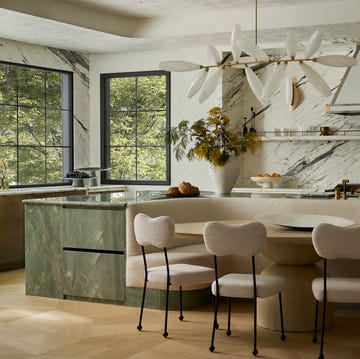
Pictured Above: A kitchen designed by Amy Sklar.
For years, oversized kitchen islands have been the be-all and end-all, but lately, designers and homeowners are gravitating toward something a bit smaller: the cook’s table.
Unlike built-in islands that can sometimes dominate a kitchen and cover most of the available floor space, cook’s tables bring a lot of flexibility to the room. Because they’re freestanding, you can move them around depending on your needs, whether that’s for prepping meals, hanging out with your morning coffee, or helping kids with their homework after school. They also tend to be smaller, which means they’re the perfect fix for small kitchens.
The other benefit is the big charm factor they add with their wooden, often traditional-looking design (think: turned legs and curvy silhouettes). As kitchens move away from ultra-sleek and minimal, pieces with warmth and character are becoming more and more popular, and a cook’s table is the perfect example of that. If you’re considering adding one to your own home, we’ll delve deeper into some of the biggest perks.
They Make Kitchens Feel More Relaxed

One of the biggest reasons cook’s tables are trending right now is that they soften the overall look and feel of a kitchen.
“A traditional island can dominate a kitchen,” says designer Amy Sklar. Because cook’s tables don’t have a bulky built-in base, they feel visually lighter and less imposing, especially in kitchens where space is limited.
Designers also point to the emotional shift happening in homes post-pandemic.
“The pandemic reshaped the way we live at home, placing greater value on spaces designed for connection and togetherness,” says designer Becky Ducsik of The Phinery. “Nowhere is this more apparent than in the kitchen, where homeowners are reimagining how they gather and entertain.”
Unlike traditional islands packed with appliances and storage, cook’s tables create a more communal focal point centered around gathering and spending time together. That relaxed atmosphere is part of what makes them feel so appealing. Designer Cynthia Lananh notes that cook’s tables strike a balance between practicality and personality, functioning as prep space, dining space, and entertaining hub all at once.
“I love a kitchen island that looks like a piece of furniture,” she says, adding that the look feels more casual, approachable, and timeless than a standard built-in island.
They Work Well in Small Spaces

While cook’s tables can absolutely make a statement in a large kitchen, designers say they’re especially effective in kitchens with tighter footprints or galley-style layouts. Because they take up less visual and physical space than a traditional island, they can help smaller kitchens feel more open and airy.


That said, larger kitchens can benefit from them too, just in a different way. “With the right vintage find or custom-crafted piece, it can anchor the room and become a striking centerpiece that adds both function and timeless appeal,” says Ducsik.
She recommends using cook’s tables as the focal point in kitchens where storage and appliances can be concentrated along the perimeter. Since seating typically wraps around all sides, she suggests leaving at least four to five feet of clearance around the table to maintain a comfortable flow.
For homeowners who want the look but don’t have space for a freestanding table in the center of the room, Ducsik also suggests integrating one as a peninsula extension at the end of cabinetry for a similar communal feel.
They’re Super Flexible

Unlike built-in islands, cook’s tables offer a level of flexibility that’s hard to beat. Since they’re freestanding, they can be moved or adapted more easily over time—a feature designers say is especially useful for entertaining.
Sklar points out that cook’s tables can create a flexible landing zone within a kitchen and are ideal for holidays or large gatherings when extra room is needed. “This is perfect for holidays and large gatherings where you need even more space,” Lananh says. She recommends adding casters if the table will double as both a prep and dining space, making it easier to move around as needed.
How to Choose the Right One

Scale is one of the most important things to get right: The table should feel proportional to the room while still leaving enough space to comfortably move around it. Height matters, too. Sklar notes that many vintage tables sit lower than standard counter height, so homeowners may need to modify them slightly with casters or leg extenders to make them more functional for prep work.
As for materials, wood remains the go-to choice for warmth and character. “Durable woods (like oak, maple, or walnut) are popular for their warmth, strength, and character,” says Lananh. “Reclaimed wood adds rustic charm, whereas metal or butcher block tops offer a more durable, industrial aesthetic.”
Ducsik echoes those sentiments and suggests echoing the table’s wood tones throughout the kitchen with details like open shelving, cutting boards, or serving pieces to create a cohesive look.
Lastly, focus on shape. Softer corners and curves can make the space feel more intimate, while rectangular tables can maximize seating and prep space. Ultimately, the goal is for the piece to feel like furniture, not cabinetry. And that’s exactly what makes cook’s tables so appealing in the first place.