6 min read
While some design enthusiasts gravitate toward the pristine finish of brand-new furniture and decor, others are drawn to the character and craftsmanship of vintage and antique finds. Shopping secondhand—especially from local sellers—isn't just a more sustainable choice; it can also help you sidestep the added costs tied to recent tariff changes. There's never been a better moment to bring home timeless pieces that have lived through decades, or even centuries, of history.
Of course, identifying a worthwhile antique isn't always straightforward. Whether you're eyeing a secretary desk with a stubborn drop-front or a Lalique bottle with a small chip on its base, determining what's truly valuable takes knowledge and experience. Without a solid understanding of the market, it's easy to pay more than an item is actually worth.
To help you shop with confidence on your next trip to an antiques store, vintage boutique, or flea market, we asked seasoned experts to share their best advice. Ahead, discover their top tips for finding historic treasures you'll love—and avoiding buyer's remorse along the way.
Buy From a Reputable Source
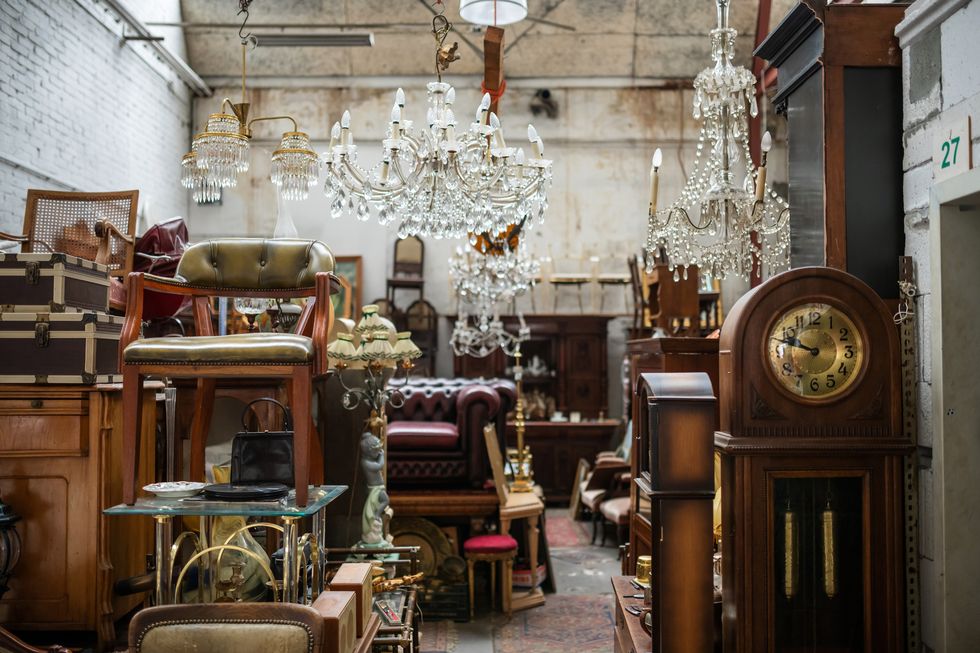
"Fakes are really the rare outliers and not the norm in the world of antiques and vintage furniture," according to Anthony Barzilay Freund, editorial director and director of fine art at 1stDibs. He says that it's always best to investigate the reputation of individual dealers or browse a reputable online marketplace that sells only vetted and authenticated items.
"When buying any piece of furniture that purports to be old, it's important that you are working with a reputable dealer who has a history of handling the type of material and a track record of participating in vetted fairs or selling on digital platforms such as 1stDibs that monitor inventory," Freund continues. That way, you can trust the info you're given. "You can perform your due diligence by asking the dealer to provide you with any information about the piece's provenance (who made it, where it was made, and who owned it over the years)."
As for antique-hunting at thrift stores and flea markets, you may find a few quality pieces here and there. "And the more you look, the better able you'll be to discern quality," says Freund. So, browse often!
Look for a Maker’s Mark
Many antiques from famed designers bear a stamp or signature indicating who made them—but many don't, and not all stamps can be trusted.
"A piece that has a stamp may be an indication that it's by a specific designer, but there have been known cases in which some badly intentioned people use someone else's branding stamp to produce fakes," says Benoist F. Drut, owner of New York–based gallery Maison Gerard. The prolific 18th-century French designer George Jacobs, for instance, was famous for his iconic stamps, but even he didn't mark every piece he designed with a signature, so "you can't rely entirely on the stamp to prove authenticity," Drut says. That being said, he adds, "It's usually obvious if it's a real stamp and not a copy."

If there's an artist or design house you like, do some research first to uncover exactly what type of mark, if any, you should be seeking. For example, one of the most popular vintage pieces is the beloved Eames lounge chair. According to the brand, which still produces some of the designer's original designs, "Labels and stamps can be the best and the quickest method of authenticating your Eames design. It may also help you to date and value your piece." Every Eames piece, from the first designs from the early 1940s to the ones produced now, bears a label. The only exception is the fiberglass shell chair, each of which bears a stamp. Both the labels and stamps feature a series of letters and numbers that can help determine the exact age of the piece.
Ask for Provenance Documents
This may seem like the most straightforward step, but it's usually the least reliable for one key reason. "Pieces that are a few hundred years old move from place to place during their lifetime, and rarely do the papers follow them," Drut explains. In most cases, you simply have to decide whether or not you trust what the dealer is telling you to be true about a piece's provenance.
Some items, however, do come with papers that can easily be authenticated. These pieces are typically ones that have been in the family's estate for generations. If such papers aren't available, he adds, a piece may also be listed in probate inventories or wills, so be sure to check everywhere.
Do Your Own Research

If you're considering an older piece, the dealer from whom you're buying it should have a general idea of the year or decade it was produced. With that information, do some digging about how similar pieces of furniture were made and with which types of materials.


"Look at books about that time period and, if you can, visit museums," says Drut. "It doesn't take a professional to see all of the subtle details—such as the materials and techniques used—that indicate if it's authentic or not."
Along the way, you might uncover some lesser-known designers whose pieces are still genuine works of art, but may be easier to find and more affordable to purchase. (If an Eames chair is out of your price range, for example, you might want to look into a Plycraft seat.)
Perform a “Run-Down”
Before making a big-ticket purchase, ask the dealer what the piece is made of—the response will be another indicator of authenticity. Take chairs as an example.
"Plenty of chairs and sofas made today are filled with foam," says Drut. "An 18th-century chair, however, will be filled with horsehair, as foam was not invented until much later in the 20th century."
You'll also want to observe where small marks or imperfections in the construction may bear the signature of a handcrafted (as opposed to mass-produced) item.
"The process of making a piece of furniture using only hand tools leaves behind 'tool marks,'" says Erik Gronning, Sotheby's head of Americana. "Saws leave a mark called a saw kerf while planes leave plane marks, and modern electrical powered saws and planes also leave marks, but theirs are regular and not inconsistent as one sees with hand tools."
Request Pre-Restoration Photos

"If the piece has been extensively cleaned and/or refinished," Freund advises, "ask to see pre-restoration photographs." Any reputable restorer regularly enlisted by antique dealers is likely to have a few on hand. Here's the thing about restorations: They're not a bad thing, and they're definitely not a reason to question a piece's authenticity or age.
For instance, Drut says, if you're considering buying a 19th-century chair whose back leg is attached with glue, "that's because it's 200 years old and, without the glue, the chair may not be usable." Looking at an image of the chair before the glue was applied can reassure you that you're getting a strengthened original, not a fake.
On the other hand, if you find a centuries-old piece that looks spotless, "How can you explain that? You can't," says Drut. “An alleged antique that looks too good to be true probably is.” Consider what an update may be concealing: "If something has been fully painted over, that often means that someone has something to hide. Stay away," says Drut.
More specifically, Gronning adds that "18th- and early 19th-century pieces in their 'original' surface have a very dark or nearly black appearance that, to the untrained eye, could appear dirty or ratty, but it is this appearance that helps authenticate its age." If this is the case with an antique treasure you're considering, it's important to look at any perceived flaws as marks of character.
"Antiques and vintage pieces have a patina and personality that one cannot find in a newly constructed object," Freund says. "Rather than viewing this as damage or wear and tear, antique lovers think signs of age give an object a visual interest, warmth, and uniqueness that really enhances the character of a room."