 4 min read
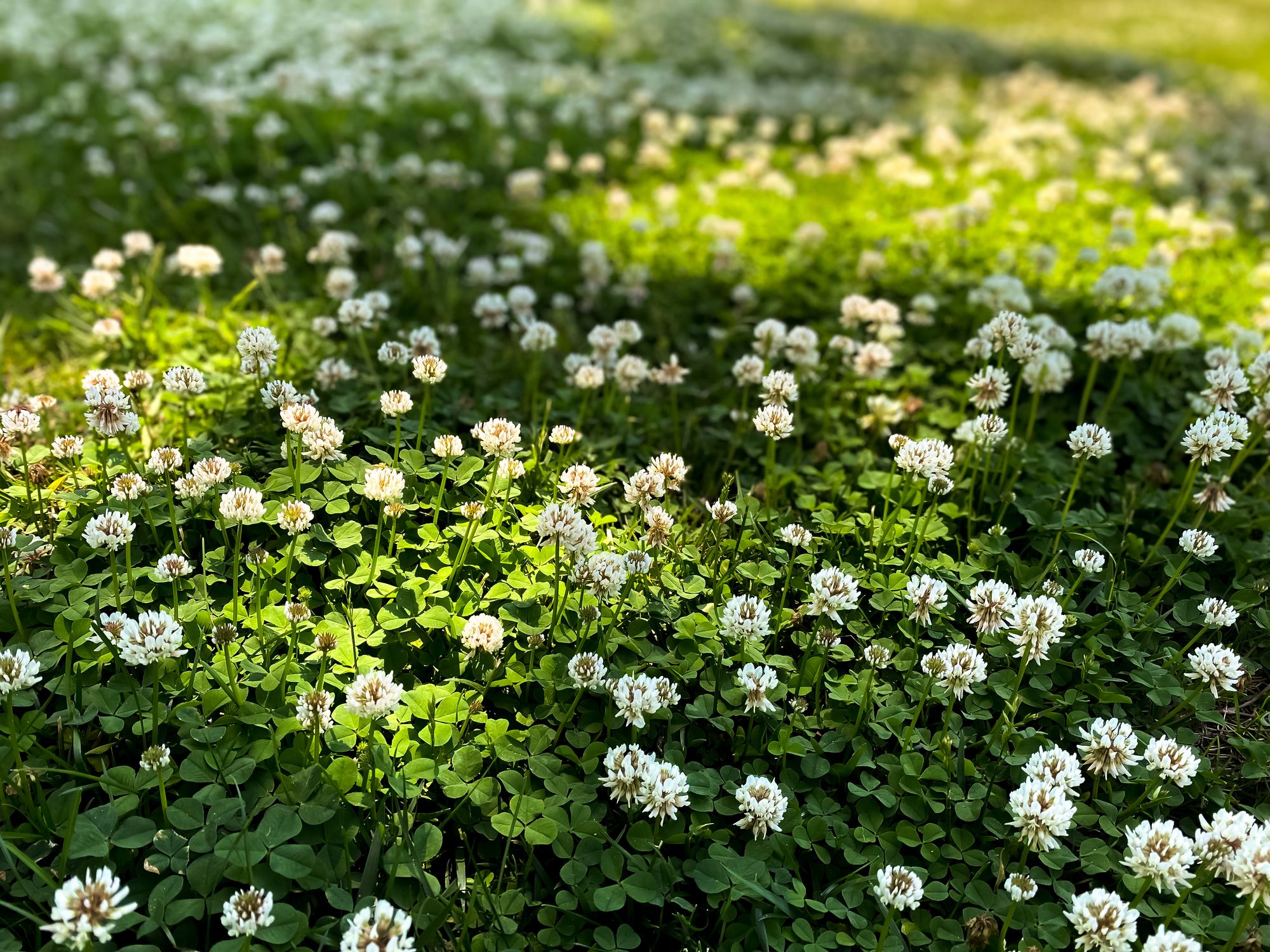
Over the past few years, traditional grass lawns have become less popular as homeowners embrace alternatives that are just as beautiful and lush—and often better for the environment. Wildflower lawns, for example, have emerged as a popular eco-friendly option. But if you prefer a more uniform look, clover could be the right alternative for your yard.
As it turns out, clover lawns offer several advantages over traditional grass, according to Allison Messner, founder of the online landscape design service Yardzen.
“Clover lawns require less upkeep in the way of water and mowing, don't require fertilizer, and they offer significantly more habitat value,” Messner tells House Beautiful. “Their seasonal blooms attract important pollinators like bees and butterflies.”
For more on the benefits of clover lawns vs. grass, continue reading below.
Additional copy by Meghan Shouse.
What Is a Clover Lawn?
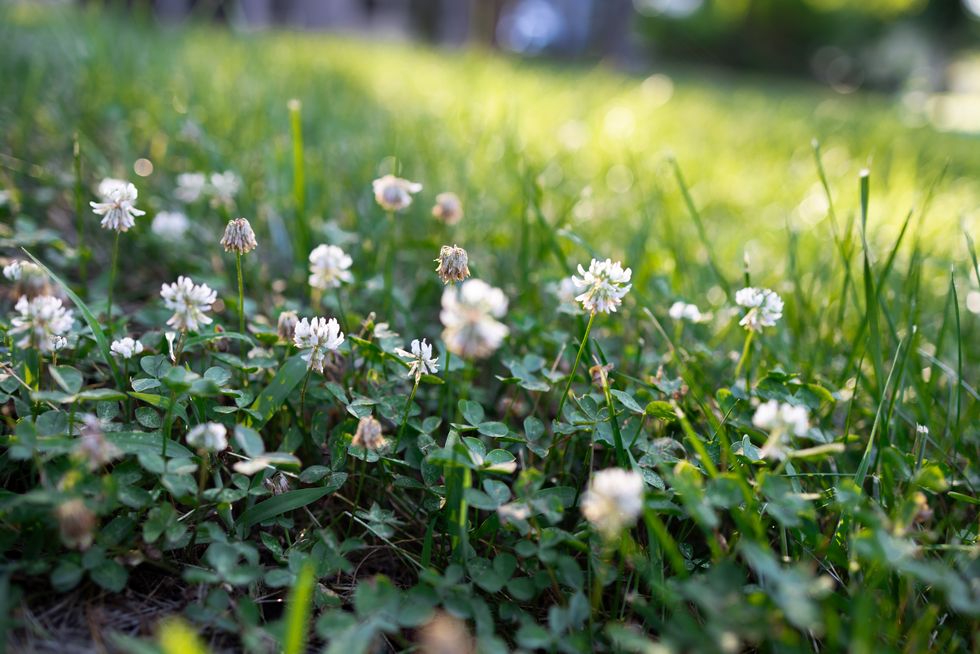
A clover lawn uses clover or a hybrid of clover and grass instead of traditional grasses alone.
"The process for seeding is very similar to that of grass seed. With lower maintenance costs, it's more economical than planting and maintaining grass turf," says Messner. Some owners also like the fact that clover can be mowed less frequently than traditional turf.
What's Wrong With Grass?
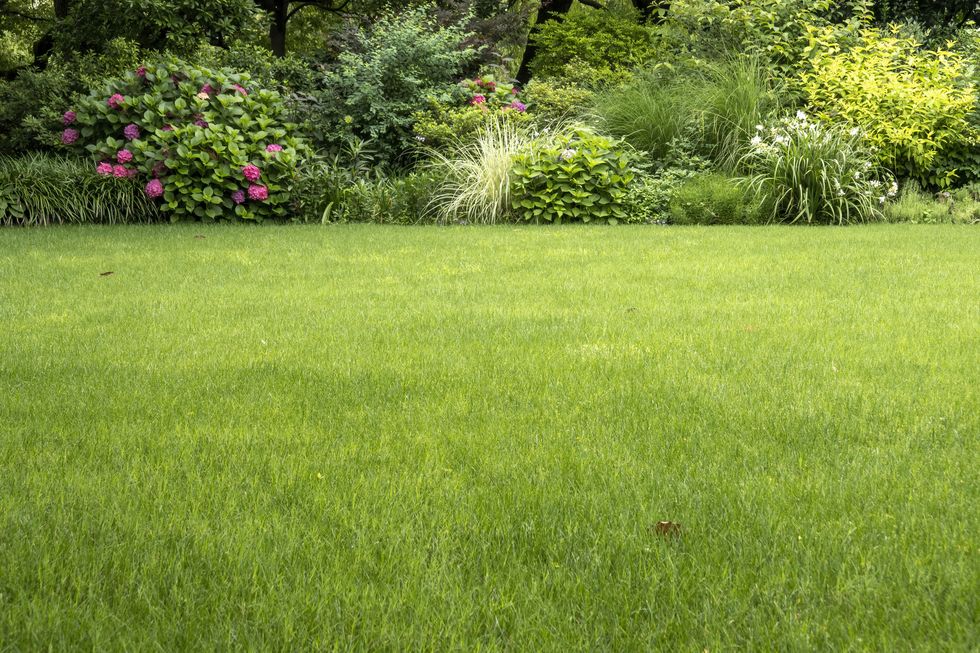
Grass has gotten a bad rap in recent years. "Grass lawns are typically the most maintenance-intensive part of a yard's landscape, requiring regular mowing, fertilization, and heavy irrigation to look good," says Yardzen's expert. "Add to that the fuel consumption and exhaust mowers produce, water pollution from fertilizer and pesticides, lack of habitat value, and major water consumption, and you've got a feature that's ripe for change."
What Are the Clover Lawn Benefits vs. Grass?

Generally, clover is drought-tolerant, so it typically stays green during dry spells with little to no irrigation (though it may die back in hotter climates during drought).
As a legume, clover is a "nitrogen-fixer." This means clover plants have a symbiotic relationship with soil-dwelling bacteria. The bacteria take nitrogen from the air in the soil and feed it to the clover, keeping it green. In exchange, the plant provides carbohydrates to the bacteria. "If you want to keep an area of green lawn, but want to lessen your environmental impact, clover is a beautiful alternative to traditional turf lawns," Messner notes.
Clover lawns also attract and support pollinators. You'll need to limit mowing, which will remove the flowers that attract these beneficial insects.


What Are the Cons of Having a Clover Lawn?
In many situations, clover is not as durable as traditional grass lawns. "Tough, low groundcovers like clover make for attractive substitutes to decorative lawns, but nothing can quite take foot traffic like a lawn," explains Messner. If you have kids or pets, clover won't stand up to heavy traffic like a traditional lawn.
Because clover doesn't form a dense canopy, you also may be able to see the soil in places, especially in winter when it dies back. And because it does attract pollinators, that can be an issue for people and pets playing on the lawn. For example, if a family member has a bee sting allergy, then it's probably not a great idea to plant a clover lawn.
Finally, if weeds creep into your clover lawn (we're looking at you, dandelions!), there is no selective product you can use that won't kill the clover, too.
How Do I Start a Clover Lawn?
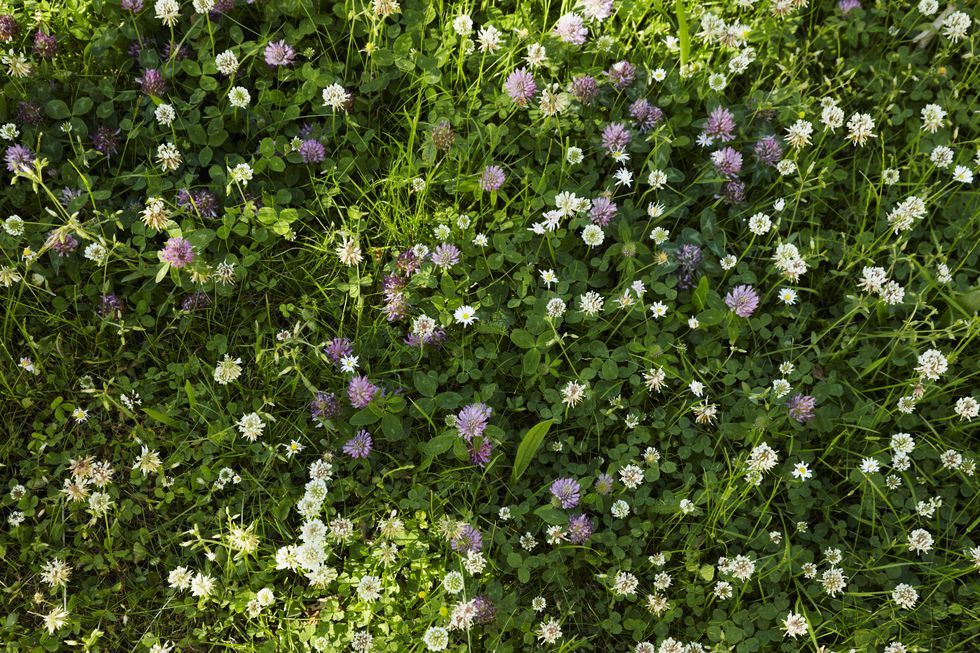
Many experts recommend using a combination of clover and grasses. That's because clover goes dormant in the winter, so planting 100 percent clover may result in soil being exposed. Exposed soil can become a great place for weed seeds to germinate, as well as lead to potential soil erosion. Microclover, which has smaller leaves, fewer flowers, and a lower growth habit compared to white clover, can be a good choice.
But to find the right seed combination for your lawn area, Messner says, "It's best to check with your local nursery or garden supplier on the variety that will thrive in your local climate and geography." Or check with your local university co-op extension service for more guidance (find yours here).
When planting seed, rake up debris such as branches and leaves first. The seeds need to make good contact with the soil to germinate. Sprinkle seeds by hand or use a broadcast spreader to distribute them evenly across your lawn. Apply a light layer of topsoil over the seeds (but don't overdo it, or the seeds will not get enough oxygen to grow).
Lastly, like any plant, clover and clover mixture lawns will need sufficient irrigation (if you're not receiving sufficient rain) as you're trying to get it established.


