3 min read
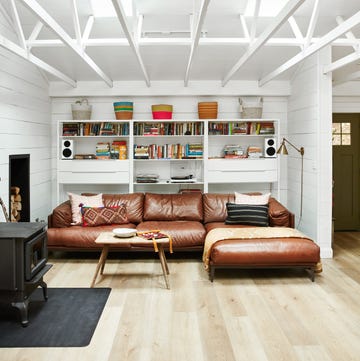
Pictured above: A guest suite designed by Leah O’Connell in our 2025 Whole Home in Austin, Texas.
Staying on top of household organization can be difficult, especially if you live in a smaller home. In compact spaces, laundry, unopened mail, and everyday clutter can pile up fast, making your home feel messy long before it’s time for a deep clean. That’s why we’re always interested in simple, expert-approved organizing strategies that are easy to stick with and actually make daily life easier.
One method worth trying is the “Two-Foot Rule.” This practical organizing strategy focuses on keeping the two feet of space you use most in every room tidy—whether it’s the area next to your bed, the countertop around your kitchen sink, or your bathroom vanity. Instead of aiming for perfectly organized rooms or picture-perfect storage, the idea is to maintain the spots you interact with every day. By keeping these high-use areas clean and functional, you can make your home feel more organized with minimal time and effort.
Ahead, professional organizers break down how the Two-Foot Rule works and share their best advice for using it to simplify your own space.
How the Two-Foot Rule Works

The Two-Foot Rule is all about elevating the tiny pockets of space you use the most. Namely, the ones that are staring you in the face day after day.
As Trish Johnson, owner of This Organized Chaos NJ, explains, it’s about “making the most of a high-traffic or high-touch area in each room of your home.” So, your kitchen counters and bedroom nightstands—not your basement storage room. The rule asks you to “think about the two feet of space in the room you’re in right now that gets used the most” and decide how to clear, edit, and reset it so the essentials are visible and within reach. It’s a micro-approach to decluttering that skips the overwhelm and gets straight to what actually matters in everyday living.
So why does it work? Because high-touch areas are where efficiency either thrives... or totally collapses. Johnson says that “in high-touch spaces in our homes, it’s important to streamline organization so that things are efficient and ultimately less time-consuming,” especially when paired with the “two-touch rule,” which states you should handle an item only twice—once to use it, once to put it back.
When these little zones are pared down to essentials, like keeping only the must-have items under your kitchen sink so you’re not digging for a sponge, your daily rhythms become smoother and far less stressful.


Plus, an organized space clears your head. As Johnson puts it, when clutter piles up on places like your nightstand, “your mental capacity is overloaded even if you don’t realize it.” But when everything has a home, you can move through your routine without thinking, and life just feels calmer.
Try Reorienting Your Organization

Using vertical storage is one of the easiest ways to keep your busiest spaces organized, turning blank walls into hardworking storage that actually supports your daily routine. By layering in slim shelves, small bins, baskets, or a few hooks, you free up valuable surface space and make it effortless to return items to where they belong.
As Tyler Moore, author of Tidy Up Your Life, explains, the key is to “add hooks, shelves, bins or baskets close to activity zones” so you can “reduce the distance between ‘I used it’ and ‘I put it back.’”
When storage lives exactly where you need it, everything has a clear home, clutter stops piling up, and your high-touch areas stay tidy with almost zero effort.
Make It a Daily Practice

A daily reset keeps the Two-Foot Rule running smoothly, and it’s shockingly doable when you shrink the task down to something bite-size.
Moore suggests making it a habit to “do a one-minute reset in the evening,” giving your most-used surfaces a quick tidy before bed. And if anything feels too annoying or cluttered, or “if it takes more than two feet of effort to put away,” that’s your cue to rethink the setup.
This tiny ritual reinforces smarter organization and keeps clutter from sneaking back in.