

Open-plan homes are instantly recognisable – light-filled spaces with few walls and a seamless transition from room to room. On the opposite end of the spectrum is the closed-concept layout, where clearly defined rooms are separated by full walls. But for many homeowners, neither type of floor plan feels quite right.
That’s where the 'broken-concept' layout comes in. This hybrid approach strikes a balance between openness and definition, delivering the airy feel people love while maintaining a sense of comfort and purpose. A broken-concept design encourages connection between spaces like the kitchen and living room, without the common downsides of open plans, such as noise, clutter or a lack of privacy.
'Huge expanses of open-plan living were already falling out of favour, but the pandemic hastened our interest in dividing up space to fulfil certain functions,' says Daniel Bowler, director of kitchen design company Eggersmann. 'However, rather than re-erecting walls and creating visual obstacles that block out light and restrict movement, the idea of broken-plan living is instead coming to the fore.'
So how does it work in practice? Instead of doors, broken-concept layouts rely on thoughtful design elements – archways, half walls and changes in floor level – to distinguish one area from another.
Ahead, you'll find five designer-approved ways to create a broken-plan layout in your own home.
Create a tunnel

This isn't always an easy option in some homes, but if you're prioritising joy and creativity in your space, anything is possible.
What to Read Next
Interior designer Josh Linder of US-based Evolve Residential incorporated a tunnel into one of his projects to create a show-stopping moment.
'Because this tunnel serves as a secondary entrance to the dining area, we saw an opportunity to create a dramatic architectural moment of interest – and even a stage for displaying a few of the client's treasures,' Josh says. This proves that opting for an unconventional floor plan can be a lot more fun – and it can pay off big time.
'As a designer, I adore broken plan layouts, as they allow for an opportunity for each space to have a distinctive point of view,' Josh adds. 'Each space receives its own wallpaper and colour palette, which results in more opportunities for me to 'play' creatively.'
Enlist archways


If a tunnel doesn't feel possible, you can always opt for a more classic approach by incorporating an arched threshold in a pre-existing wall.
Archways soften the transition between rooms, reducing noise and giving each space a clear purpose, while still allowing the home to feel connected. Instead of revealing an entire room at once, they offer just a hint of what lies beyond.
They don’t have to be arched, of course – even a simple squared opening can create the same effect. In this kitchen, the opening acts as a gentle threshold between spaces, allowing light to pass through while still defining where one area ends and another begins.


Use glass


Glass is an architect’s secret weapon – especially when used as a quasi-wall. It separates rooms without taking up any visual space, allowing sight lines to remain open while still creating clearly defined zones.
Glass partitions or internal windows can prevent small spaces from feeling enclosed, while still reducing noise and creating a sense of separation.
'Take care to ensure enough light still flows into the area,' says James Bernard, director of London design-build company, Plus Rooms. 'Structural glass enables homeowners to have all the benefits of a broken-plan without the drawbacks of less light.'
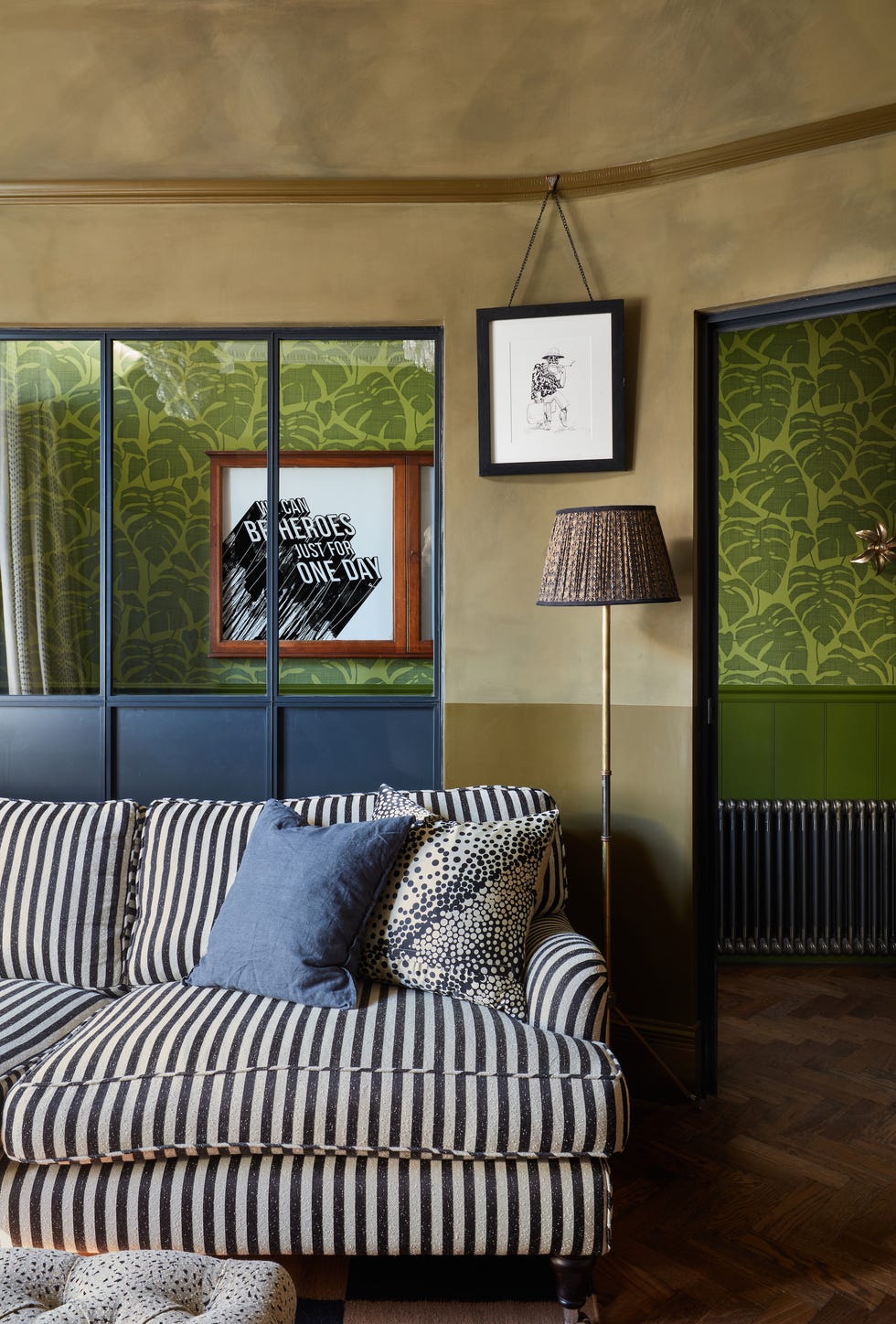

Frosted or reeded glass can also be used if you want to soften views between rooms while still letting light filter through. Slim metal frames, black grid-style glazing or minimal frameless panels can all help define spaces in a subtle way.
A sunken layout

A traditional sunken living room is a design trend that took off in the 1970s, but one that still feels novel today. The natural change in elevation creates a sense of separation, subtly distinguishing the living area while maintaining an open layout.
Wendy Gilmour positioned her sunken living room next to her kitchen – a layout favoured by Jen Nash, head of design at Magnet. 'Due to the lack of walls, socialising in your home will become much easier,' says Jen. 'This is especially great for families as it allows them to spend more quality time together without making changes to their routine. It also makes a great space for hosting as you can keep up conversations with guests whilst multitasking.'
Colour-coding

If the spaces you're trying to delineate are a bit too small for any real architectural work to happen, colour-coding the two areas can separate them.
Using different colours, finishes or even subtle shifts in tone helps signal a change in function without interrupting the overall flow of the room. A deeper shade around a dining nook, for instance, can make the area feel more intimate, or you might extend a colour from wall to ceiling to wrap the zone completely.
Of this broken-plan entryway, designer Susannah Holmberg says: 'It felt important to create an entry that set the stage for the rest of the design. To that end, we used wallpaper and paint on the ceiling to demarcate the space, even if there weren't walls and doors. That way, they got that showstopper, first impression moment.'
Follow House Beautiful on TikTok, Instagram and Pinterest


