Celebrating Easter in Germany is about more than just an egg hunt. From painting hollow eggs to decorating twig trees, German Easter traditions have a long history, with some popular customs that have spread around the world –such as the much-loved Easter bunny. Keep reading to find out what makes Germany so special at Easter.
1
Painted eggs ('bunte Eier')
Kerrick//Getty Images
Eggs have long represented springtime. While Eastern Orthodox Christians were among the first to paint eggs, the Germans started hanging them on trees.
Known as Bunte Eier or Osterei, many German families will colour boiled eggs to be used in Easter egg hunts or to give away. Some people also 'blow out' raw eggs in the lead up to Easter before painting and hanging them from branches around the home and garden.
2
Easter bunny ('Osterhase')
Oliver Perrott/Lights4Fun
One of the most prominent symbols of Easter, the origins of the Easter bunny stem from the Germanic and Saxon goddess of dawn and spring, Eostre. Germans introduced the tradition of the Easter bunny to America, with children making nests for the Osterhase.
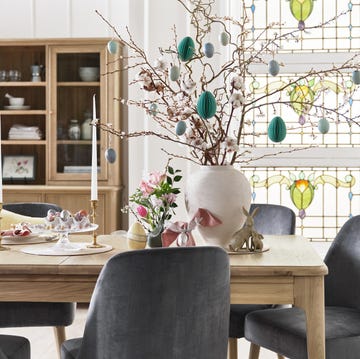
The German Easter tradition of decorating branches and bushes with eggs is centuries old, although its origins still remain mysterious. The popular Easter tree has shown no sign of slowing down and is now adored in many European countries. Its popularity has seen many retailers stock white or brown twig trees, which can be decorated with egg ornaments.
Pictured: Twig tree and egg decorations from Lights4fun
4
Easter brunch
House Beautiful/Mel Yates
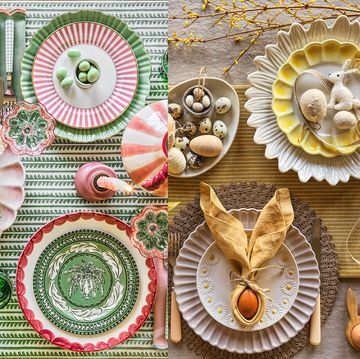
Easter brunch is a big deal in German households. Beautifully laid with eggs, fresh flowers and the best crockery, highlights of an Easter brunch include an Osterkranz (Easter wreath), Aufschnitt (cooked meats), Brötchen (fresh rolls, usually from the local bakery), and of course, chocolate.
Advertisement - Continue Reading Below
5
Easter lamb cake ('Osterlamm')
GMVozd//Getty Images
A simple lamb-shaped cake exists in countries such as Germany, Poland, the Czech Republic, France and Italy. The white cake recipe is baked in a lamb (or bunny) mould for Easter and then decorated with white icing. Originating from Germany, it is thought to represent Jesus Christ as the sacrificial lamb of God.
On Easter Sunday, the traditional Osterreiten sees men riding horses in procession across the countryside to the southwest of Berlin. This is held on Easter Sunday to celebrate the resurrection of Jesus Christ. Men wear top hats, long coats and black ties.
Advertisement - Continue Reading Below
7
Easter bouquet
Westend61//Getty Images
The German tradition of Easter bouquets is all about bringing the outdoors in. Many households cut branches from blossom trees (or forsythias) on Maundy Thursday and put them in a vase until Easter Sunday. To complete the look, families paint and decorate the eggshells several days before Easter.
8
Maundy Thursday ('Gründonnerstag')
Oliver Perrott/Lights4Fun
In Germany, Maundy Thursday is known as Gründonnerstag, which literally translates to 'green Thursday'. Marking the end of Lent, Germans celebrate the day by eating something green — such as spinach, which is a firm favourite. Many households will add a big green salad to their evening meal to celebrate.
Advertisement - Continue Reading Below
9
Easter bonfire ('Osterfeuer')
Symbiont//Getty Images
Easter bonfires in Germany have been around for decades. Traditionally, the people of Hanover, Westphalia and Lower Saxony marked the end of winter with Easter fires on the evening before Easter Sunday. They tend to occur in beachfront areas, and represent light overcoming the darkness.
10
Easter greetings ('Ostergrüße')
Olena Ruban//Getty Images
In Germany, Easter is the second most important Christian holiday after Christmas, and it is common for people to wish each other 'Happy Easter', or 'Frohe Ostern', on or before the long Easter weekend. Pupils can also look forward to two full weeks off during the Easter break (Osterferien).
Easter greetings can also go beyond just words. Some people like to gift little baskets to their family, friends, colleagues and neighbours.