4 min read
During their time as homeowners (and renters), millennials have put a pretty big stamp on the interior design industry. After all, who could forget the era of millennial gray (or millennial pink, for that matter) or the modern farmhouse aesthetic, accented by heaps of shiplap? Oh, and don’t forget the many ever-evolving spins on the gallery wall, a deep appreciation for history and nostalgia, and the “plant parent” phenomenon (among other trends) that still maintain today.
Whether dated or not, all of this is reflective of a generation that has never shied away from doing their own thing. That millennial gumption—favoring reinvention, daring to dabble, and bucking tradition—is just as strong today as it’s ever been. Here, designers share the decorating rules millennials grew up with that they’re pushing aside in favor of homes that better reflect how they actually live.
Design With Others in Mind
Millennials grew up watching their parents and grandparents maintain homes with plastic-clad couches, formal rooms that nobody used, accessories that meant nothing, and scenes curated for guests’ eyes, rather than for the people actually living there.
“This generation has a fundamentally different relationship with home,” says Michelle Murphy, interior designer at Demi Ryan. “After navigating a pandemic, remote work, and rising housing costs, home became everything. Their office, their reflection, their sanctuary, their social space, everything.”
When a space has to do that much for you, it naturally starts reflecting who you are. To that end, Ryan says millennials have abandoned the idea of designing with “company” (or even resale value) in mind; they’ll happily use the fine china and (uncovered!) good furniture every day of the week.
Rooms Should Have Matching Furniture

Thumb through old design books and you’ll probably notice that matching furniture sets abound. Entire bedrooms were often purchased as a bundle—you may even remember shopping the furniture floor with your parents and selecting an all-in-one collection.
“It seems that millennials have heard the design experts enough times to know that matching furniture sets are an absolute no,” says interior designer Lindsey Herod. “Instead, millennials collect unique pieces that complement, but not match, each other. I see the same with China and dinnerware. We aren't afraid to mix settings!”
Rooms Must Find a Classic Use
More of life is being lived at home than ever before, and millennials are certainly using their space differently than their parents or grandparents did. Gone are the days of “sitting rooms” or “piano rooms” that served no real purpose in day-to-day life. Instead, this generation is carving out spaces that reflect their hobbies, passions, and favorite ways to wind down.
“I'm seeing clients ask for reading corners, coffee bars, listening rooms, nap-worthy window seats, little places where the only expectation is to exist for five minutes,” says Alexis Vitale, interior designer at Vitale Design Group.
Appliances Must Disappear

For years, luxury kitchens emphasized concealing appliances behind cabinetry, or at the very least encouraged matching pieces. The millennial generation has thoroughly abandoned that notion, to the point they’re even turning appliances into focal points.


“While there will always be a place for integrated appliances, I’m seeing more homeowners prioritize designing the kitchen around how they actually live rather than following a design convention,” says interior designer Beth Diana Smith. “If an appliance is used every day, there’s value in making it both beautiful and accessible.
Restraint Equals Sophistication
White walls, neutral furniture, lack of curated collections; this is all viewed by millennials as boring, impersonal, and bland. “This generation approached their homes with much more personality and lightheartedness,” Herod says.
Murphy agrees. She adds, “They want color and pattern and personal pieces of their history woven in. Like their grandmother's art next to something they found at a local market next to a custom piece their designer sourced just for them. This is curation with confidence.”
Rooms Must Be “Complete”

Furnishing an entire room at once is not necessarily the most economical path forward. Further, it eliminates the opportunity for a slow, purposeful curation that feels very personal to the person living there. Instead, more millennials are leaning into the concept of “slow decorating.”
“Millennials have realized a home is something you grow into. This might be my favorite ‘old rule’ to see disappear,” Vitale says. “They’re leaving space for the art they haven't found yet, the chair they'll discover on vacation, the vintage piece with a story.”
Traditional Luxury is the Height of Good Design
Becky Ducsik, interior designer at The Phinery, says their millennial clients have pretty much abandoned the concept of acquiring traditional luxury furniture and decor. Instead, they’re focused on building out homes with furniture they’ll sit on comfortably and items they’ll admire with some fondness. It’s all chosen because it represents who they are.
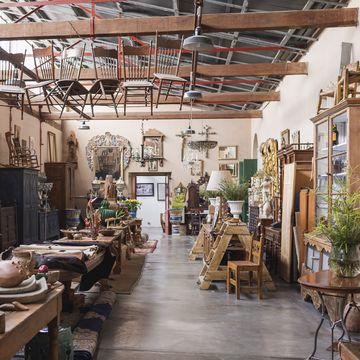
“For millennials, the value of home furnishings is often less about the price tag and more about the uniqueness of the piece itself,” Ducsik says. “A one-of-a-kind vintage find purchased for a bargain can carry more appeal than an expensive designer item because it reflects resourcefulness, individuality, and a personal point of view.”
She adds that the thrill of the hunt—and the story behind the discovery—becomes part of the object's value. This is true whether purchased from an antique market, picked up while traveling, or found on a digital marketplace.
Ceilings Require White Paint

On that note, the old-fashioned rule of always painting the ceiling white has been wholly abandoned by millennials. The idea was that it made a room feel more spacious and taller. In this new, more personalized world, though, the ceiling has become the fifth wall instead of the forgotten one.
“I love that we're finally looking up,” Vitale says. “For decades, the ceiling was basically ignored. Paint it white and move on. Now we're wrapping rooms in color, adding wood, wallpaper, beams, even limewash. Turns out white isn't always the answer, and sometimes the best way to make a room feel bigger is actually to make it feel cozier and more inviting.”