4 min read
When you want to feel calm and centered in your home, you likely try to avoid messes wherever you can, right? Even maximalists don’t want things to look too cluttered, and those with small rooms want to avoid visual chaos even more.
Best intentions aside, some decor choices or organizing solutions may be inadvertently creating visually crowded spaces. Perhaps you can sense that a space doesn’t feel tidy, but you can’t quite put your finger on the “why.”
Apart from clutter causing “increased anxiety and stress,” as Michele Vig, owner and chief organizer at Neat Little Nest, puts it, it can make it tough to clean, which only adds to chaos. “When you have too many things on counters or floor, it takes more effort to move those items to clean underneath them,” Vig points out. And, if you’re aiming to make your rooms feel more spacious, any disarray can make a room feel smaller.
“If there are items all over the floor and surfaces, the room will start to feel like it is closing in on you,” says Heather Aiello, CEO and founder of The Organized You.
Ahead, discover the messes you may be unknowingly creating in your home—plus how to get them under control once and for all.
Mismatched Hangers
“Many organizers downplay the importance of matching hangers, saying that they aren't worth the investment. The reality is that if you simply select matching hangers from the start, it's the same one-time investment you would have already made,” Vig says. “Matching hangers significantly reduce the messy look in a closet, and if it's the only change you make, it can have a huge positive impact.”
Too Much Open Shelving

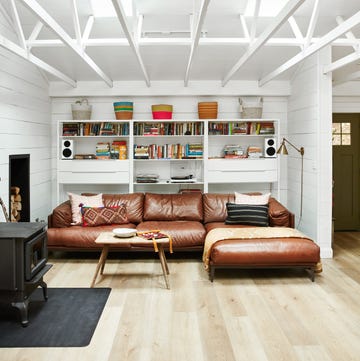
While open shelving has had its day in the sun in recent years, it has been waning in popularity, primarily because it's prone to creating clutter. If you still love open shelving, you can include a few shelves here and there, but maybe pull back a bit.
“Open shelves in kitchens, bathrooms, playrooms, or living spaces can seem like a great way to keep things accessible and get them off the floor, but when every item is visible, the eye has nowhere to rest,” Aiello says. “Even neatly arranged shelves can look busy when there are lots of different colors, shapes, labels, and containers competing for attention.”
As an alternative, Aiello recommends a combo of open and closed storage. “Reserve open shelving for a limited number of nice or frequently-used items, and use baskets, drawers, or cabinets to conceal the rest,” she adds.
Mismatched Bins
Both organizers say that when different types of bins are used in a space (i.e. in varying colors or mixing clear, woven, and plastic containers), it can ironically make things look more disorganized. Vig calls this approach “distracting” and something that “can quickly make the space feel overwhelming.”


“The room can still feel cluttered because the storage itself becomes the visual focus,” Aiello says. “Instead, I recommend simplifying your storage. Choose a small number of materials, colors, and container styles that complement the room. The consistency will create a much calmer space.”
Over-the-Door Organizers

“Shoe organizers, pocket organizers, hooks, and hanging storage are popular because they add storage and get items off the floor,” Aiello says. “They can quickly turn doors and walls into highly visible storage areas. When every pocket or hook is filled, the result can look cluttered, even if everything technically has a place.”
But these solutions aren’t a total “no-no” for Aiello. She suggests simply using them more selectively, such as behind closed doors or in less-visible areas.
Clear Bins in High-Traffic Spots
Vig says that she loves clear bins behind cupboard doors, in storage rooms, and under sinks. But using them in spaces like playrooms, living rooms, and bedrooms isn’t the best fit, since they can bring too much of a jumbled feel to a space. “Opting for opaque versus clear or even solid-colored bins can really tone down the visual noise in high-traffic spaces in the home,” she says.
Cluttered Bookshelves

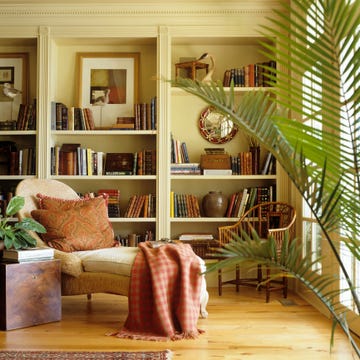
“Books on a shelf can be very beautiful and can quickly look messy if they aren't maintained,” Vig notes. “Bookshelves can also become visually chaotic when they aren't intentionally designed, and there are too many small pieces on the shelf. The goal is to make the arrangement feel intentional rather than like a collection of things that simply ended up there.”
(Some) Furniture That Doubles as Storage
While storage ottomans, cube shelving, large cabinets, rolling carts, and other multifunctional furniture can seem like smart ways to maximize space, in actuality, they can just lead to “more stuff,” says Aiello. Large pieces can also add too much bulk to a room.
“Bulky storage furniture takes up visual and physical space, particularly when several pieces are added to the same room,” she adds. “Declutter first, then determine whether you truly need additional storage. Sometimes the best organizing solution is less furniture, not more.”