The ultimate in nature-inspired decorating, green is one of the most popular and versatile colours to use in a living room. In colour psychology, greens are usually associated with balance and harmony and act as the bridge between stimulating warm colours and calming cool colours.
What colour goes with green in a living room?
The versatility of green makes it a bit of a gift in interior design, but it doesn't make it easier to narrow down your choice of colour combination. As a general rule, mid-greens sit very happily with black and white, paler shades can desaturate rooms with lots of warm oranges and pinks, and sophisticated forest greens are a great accent for neutral rooms.
31 green living room ideas
A green living room doesn't necessarily mean wall-to-wall colour, however. Indoor plants are the most obvious way to bring in elements of green. You can use clever paint techniques to highlight wall panelling or window frames in pretty shades of sage, or go for one of the most desirable living room pieces – the green velvet sofa.
If you're considering a living room makeover in the near future, read on for 31 ways to decorate with every shade of green...
1
Light and airy
House Beautiful
For a living room that feels fresh, light and airy, pops of green on a crisp white base are a safe bet. Aside from the fabulous green velvet sofa, the key components that make this living room work are the black and white accents, blonde wood and hints of brass – a combination that can be replicated in any room in your home with great success.
Photography Rachel Whiting, Styling Hannah Deacon, Production Sarah Keady
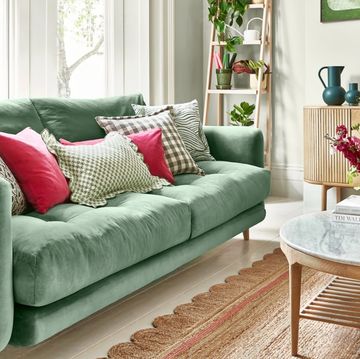
There's an abundance of botanical references in this light and airy living room. The crisp apple green makes the perfect companion to accents of fuchsia and the pale browns of jute and rattan. Indeed, if you are going to live with botanical influences so closely, it is best to offset with as much wood as you can get away with.
Painting your ceilings is a good trick for large living rooms that feel a bit cavernous and uninviting. Where light colours expand, dark colours recede, so using a dark colour will create the impression of a lower ceiling, making a large living room feel more intimate and cosy.
If you're a confident decorator, hints of green might not have the impact you want. Myland's Sorrel Green (pictured here) is perfect for colour drenching, and the glossy sheen helps to lift and brighten.
Advertisement - Continue Reading Below
5
Pastels
Photography Polly Wreford, Styling Rebecca de Boehmler, Production Sarah Keady
This is a great example of using pastels in a really sophisticated and serene way. This is also a nice one to reference for living rooms with an all-over pale colour scheme. The modest accents of black provide some contrast but there is a real embrace of pale and delicate green tones.
If you have a WFH corner in your living room, don't let it languish unadorned and uninspiring between Zoom meetings. A comfy chair, a bold colour like deep forest green and a view of the outdoors can all help.
Bold green can work well with patterns for a more maximalist theme. Using contrasting shades can delineate and break up compact spaces, meaning this effect would work well in a compact green living room.
Photography Chris Everard, Styling Rebecca de Boehmler, Production Sarah Keady
Owing to their lightweight furniture and timeless neutrals, Scandi living rooms always feel modern. Take a leaf out of their playbook and saturate your space with warming creams and biscuit tones – a colour palette that modulates beautifully over the course of the day – sofas that sit low to the floor to open up the space above, and a great big nod to the outdoors with an oversized plant.
Advertisement - Continue Reading Below
9
Wood tones
Photography Simon Bevan, Styling Jennifer Haslam,
If you're lucky enough to have ample wood tones in your home like this fabulous living room, it makes for an instant pairing with green. Note the textured finish on the walls that is picked up so beautifully in a flood of natural light.
Photography: Rachel Whiting, Styling: Hannah Deacon, Direction: Sarah Keady
Designers and stylists will always expound the decorative benefits of using different heights when styling a sideboard or shelf – the artwork has been arranged in a bit of a mismatch of placements, whilst candle holders and vases have been chosen and arranged in groups of alternating sizes.
Reddish browns, forest greens, warm pinks, and terracottas are part of a new wave of 70s design references. Heavy, floor-to-ceiling curtains are a great way to highlight high ceilings and frame an interesting view of the outdoors.
We are totally taken with this little reading corner that goes big on colour in a small space. Awkward pockets like these are perfect for experimenting with intense shades. Farrow & Ball suggest using this rich olive green paint if you're low on natural light – so it's perfect for awkward alcoves.
If you're unsure of how to pair your greens, a black and white scheme is a safe bet. Just be sure to add a warming element – in this Habitat living room it's the red-toned wood, but pops of orange or yellow would do the job too.
Green doesn't just belong on walls – and in fact, if you have a really rich colour palette in your living room, a burst of refreshing green makes for a great companion.
Tiles have long been used to introduce colour and pattern to areas of the home that are high traffic, but its uses are expanding and becoming more creative. The full height tiled feature wall is such an unexpected addition to this living room, but creates a fabulous irredescent focal point.
Pictured: Cosenza Sofa, Monza Coffee Table, Aldbury Armchair, Marino Armchair and Amalfi Sideboard, all at Ercol
16
Botanical motifs
Brent Darby / House Beautiful
A green botanical wallpaper – Melanie Lissack's living room is covered in Little Greene's Bird & Bluebell wallpaper – that reflect local plants or wildlife is a playful way to bring the revitalising aspects of nature into your living room. This is especially effective in framing your view and creating a visual link between outdoors and in.
Advertisement - Continue Reading Below
17
Double drenching
courtesy of Little Greene
Double drenching is an impactful painting technique that involves saturating all available surfaces (walls, ceilings, radiators, woodwork) in two or more colours within the same colour family. They might share a similar intensity — Little Greene's Dark Brunswick Green, Hopper and Citrine shown here are equally vivid — but more importantly, they have differing undertones, which ensures enough contrast between them.
18
Gallery wall
Desenio
We're big fans of a gallery wall in a living room, and this zesty green and yellow example works beautifully against a sage background. A gallery wall is a great place to introduce complementary colours – if you use green and yellow, a warming terracotta would make a great additional accent.
Bookcases and bespoke storage or display units are often painted white – the aim being that the outlining structure will recede and the decorative accessories will stand out. But white can be incredibly eye-catching, and by contrast, deeper tones like this lovely olive green can often provide a more subtle backdrop.
Green is on the cooler side of the colour wheel, so using green undertones can offset saturated colours like intense yellow, orange, or pink. This clever design trick balances the intensity of the walls in this neat living room/home office corner.