4 min read
There are plenty of tried-and-true tricks for making a small room seem bigger: mirrors that bounce light and allow reflections to create the feeling of space, reducing clutter, and carefully curating your decor. While these approaches certainly work, designers are making the case for turning to paint. In fact, there are some who believe it’s the most effective way to make a diminutive space seem larger.
“Paint is a great way to make a small room feel larger because it changes the visual perception of the space,” says Joe Waroquier, founder and principal designer of Joe Waroquier Home.
Amber Guyton, interior designer and founder of Blessed Little Bungalow, agrees, and says, “Painting a small space makes the room feel bigger because it gives the eye an illusion that the space has no bounds. This is one of my favorite things to do with powder rooms and bedrooms that need to feel like you're stepping into a different world that's cozy versus cramped.”
To harness paint tricks that designers always turn to for small rooms, read on.
Paint an Accent Wall

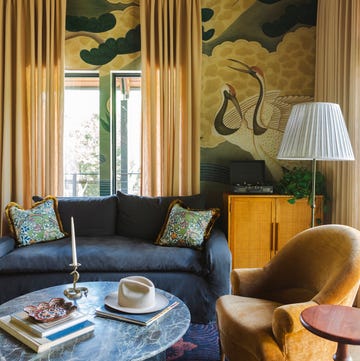
If you don’t want to go all in with a color, painting an accent wall is a great way to integrate color while not overwhelming the space.
As Guyton says, “Painting an accent wall can give a space a pop of color while also visually elongating the room to one that feels larger.”
Color-Drench It

On the flip side, if you’re willing to go bold with color in a small space, color drenching, when done just right, can be a way to make a small space seem larger.
“My favorite, and likely the most effective, way to make a room look bigger is to select one color to apply to all of the walls, trim, doors, and ceiling in a space,” says interior designer Jewel Marlowe. “This color-drenching technique blurs the architectural lines, and the eye loses track of where walls stop and ceilings begin.”
She says that this trick works when using saturated colors (such as deep green, blue, or burgundy) or light colors.
“If you like the concept, but want a little more visual interest, try painting the walls in a wipeable matte finish and the trim and cabinetry in a high-gloss finish,” Marlowe adds.
Pay Attention to Undertones

In a small room, “pay attention to undertones, not just whether a color is light or dark,” Waroquier says. “There is this line of thinking that light, pale colors automatically make a room feel larger—but warm, muddy undertones of light-colored paints actually can counteract the 'light and bright' feeling of softer paint colors. Always test several large swatches in the room and check them throughout the day under different lighting conditions before committing to a shade.”


Paint the Ceiling

Painting the ceiling has become more and more of a design trend, and it’s one way to trick the eye into thinking a room is larger.
“Ceilings, also known as the fifth wall, tend to go overlooked, but considering it as a key part of the design process can change how small or big a space feels,” Waroquier remarks. “Continuing the wall color onto the ceiling softens the overall transition between vertical and horizontal surfaces. It's a long-standing design trick because it works.”
Guyton adds that you can consider painting the ceiling a shade darker or lighter than the walls for a monochromatic look.
Split It in Half

Guyton calls this the “glass is half full” method of painting a room to make it feel larger—and it works if you’re nervous about committing to a color for an entire wall.
She advises going up only four to six feet with paint on a wall, which is considered chair-rail height, or you can add wainscoting.
“My living room ceilings were 18 feet high, and I didn't want to commit to that much paint or potential darkness in the room,” she shares, saying that painting halfway up gave it a “custom look” and “the right amount of a pop of color in the open space.”
Consider Dark Hues

Although it’s long been thought that dark paint colors can make a room feel smaller, many designers believe the opposite.
“Embrace darker, moodier colors when you can,” Waroquier says. “Just as people think light colors equal bigger spaces, many think that dark colors can close a room in or make it look smaller. But a deep, saturated shade can actually blur the edges and corners of a room, so you get this beautiful, cocooning effect that generally offers more visual depth and interest.”
Let the Light Guide You

Waroquier says that you should always let a small room’s natural light guide your paint choice.
“I always consider the natural light in a space before choosing a paint color,” he says. “In a darker room with little to no natural light, I prefer to avoid stark white because it can often read flat or even gray. A softer neutral or even a more saturated shade works better with existing light in a room.”